

For Healthcare Professionals Only
Myo-inositol has become an increasingly recognised nutritional consideration for women with polycystic ovary syndrome (PCOS), particularly in relation to insulin signalling and metabolic health. PCOS is increasingly being referred to as polycystic ovary and metabolic syndrome (PMOS), reflecting a broader understanding of the condition that extends beyond the ovaries to include its metabolic features.
Myo-inositol is also one of the most extensively studied forms of inositol in women with PMOS. In this Formula Focus, we look at what myo-inositol is, what the research has shown and why Proceive Pure Myo-Inositol provides 4,000 mg in a single daily sachet.
Myo-Inositol and PMOS
Myo-inositol is a naturally occurring compound produced by the body and also found in foods including fruit, beans, grains and nuts. It is involved in a number of cellular processes, including acting as a second messenger within insulin signalling pathways.
This is particularly relevant in PMOS, where insulin resistance is a common metabolic feature and can occur across different body sizes. When cells become less responsive to insulin, the body may compensate by producing more insulin (compensatory hyperinsulinaemia). Higher circulating insulin levels can contribute to increased ovarian androgen production and interact with both the metabolic and reproductive features of the condition. Myo-inositol has therefore attracted considerable research interest as a nutritional approach to supporting insulin signalling in women with PMOS.
What Does the Research Say About Myo-Inositol and PMOS?
Clinical studies have investigated myo-inositol across a range of metabolic, hormonal and reproductive parameters in women with PMOS. Research has reported improvements in measures of insulin resistance and insulin sensitivity, as well as fasting insulin, androgen concentrations and menstrual cycle parameters, although outcomes vary between studies.¹
Reflecting this growing evidence base, the 2023 International Evidence-based Guideline for the Assessment and Management of PCOS states that inositol may be considered in women with PCOS according to individual preferences and values, noting its potential to improve some metabolic measures and its limited harm.² This makes myo-inositol an interesting consideration for healthcare professionals supporting women with PMOS, particularly where metabolic health and insulin signalling form part of the clinical picture.
Why 4,000 mg of Myo-Inositol?
The dose of a nutritional ingredient matters when considering how closely a product reflects the research in which that ingredient has been studied. A 2024 systematic review and meta-analysis undertaken to inform the international PCOS guideline examined the available evidence for inositol supplementation in PCOS. Among eight studies comparing myo-inositol plus folic acid with folic acid alone, six used 4 g of myo-inositol per day.¹ A number of individual studies have administered this as 2 g twice daily, and 4 g/day has become one of the most commonly studied daily amounts of myo-inositol in women with PMOS.¹˒³
Proceive Pure Myo-Inositol provides the full 4,000 mg (4g) daily amount in one pre-measured sachet, offering a convenient once-daily format without the need to measure powder or take multiple doses throughout the day.
Why Pure Myo-Inositol?
There are several naturally occurring forms of inositol, with myo-inositol and D-chiro-inositol receiving particular attention in PMOS research. Myo-inositol has been studied both alone and in combination with other nutrients and forms of inositol. Importantly, a substantial proportion of the clinical evidence for inositol in PMOS has investigated myo-inositol itself, including studies using 4 g/day.¹ Proceive Pure Myo-Inositol therefore keeps the formulation deliberately simple: 100% myo-inositol and nothing else.
Each daily sachet provides:
- 4,000 mg pure myo-inositol
- A single-ingredient formulation
- No fillers, binders, preservatives or artificial colours or flavours
- A tasteless and odourless powder that can be mixed into water, juice, smoothies or yoghurt
- A pre-measured once-daily sachet
- A Certified Vegan formulation
The single-ingredient format also gives healthcare professionals flexibility. Rather than combining myo-inositol with a predetermined selection of additional micronutrients, it can be added where appropriate alongside a woman's existing preconception nutrition plan.
Where Can Myo-Inositol Fit in Preconception Care?
PMOS can present differently from one woman to another, and not everyone will have the same metabolic, hormonal or nutritional considerations. Myo-inositol is therefore best considered as one potential component of an individualised approach rather than in isolation.
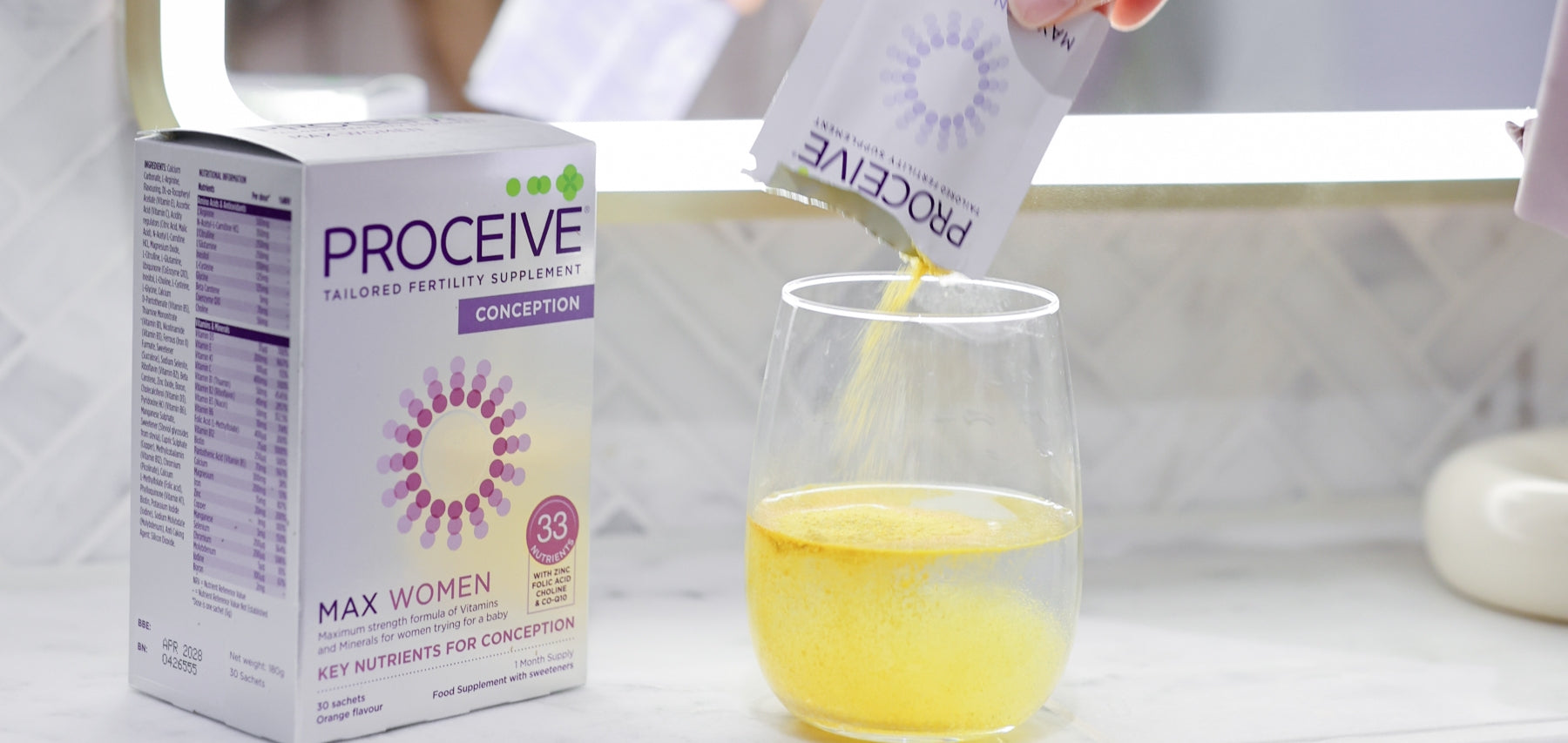
For women with PMOS who wish to include myo-inositol as part of their preconception nutrition, Proceive Pure Myo-Inositol provides a straightforward way to obtain the 4 g daily amount widely used in clinical research. It can also be taken alongside Proceive Women or Proceive Max Women, allowing targeted myo-inositol supplementation to complement rather than replace comprehensive preconception nutritional support. For healthcare professionals, this provides a practical option when myo-inositol is considered appropriate: a pure, single-ingredient formulation, at a daily amount commonly studied in women with PMOS, in one convenient sachet.
Frequently Asked Questions
-
What is Myo-Inositol?
Myo-inositol is a naturally occurring compound produced by the body and also found in foods including fruit, beans, grains and nuts. It is involved in a number of cellular processes, including acting as a second messenger within insulin signalling pathways.
-
Why is Myo-Inositol studied in women with PCOS/PMOS?
Insulin resistance is a common metabolic feature of PCOS/PMOS. Myo-inositol has attracted research interest as a nutritional approach to supporting insulin signalling, with studies investigating metabolic, hormonal and reproductive parameters in women with PMOS.
-
Why does Proceive Pure Myo-Inositol provide 4,000 mg?
A 4 g daily amount is one of the most commonly studied amounts of myo-inositol in women with PMOS. Proceive Pure Myo-Inositol provides the full 4,000 mg daily amount in one pre-measured sachet.
-
Can Proceive Pure Myo-Inositol be taken alongside other Proceive formulas?
The article states that Proceive Pure Myo-Inositol can be taken alongside Proceive Women or Proceive Max Women, allowing targeted myo-inositol supplementation to complement rather than replace comprehensive preconception nutritional support.
References
-
Fitz V, Graca S, Mahalingaiah S, et al. Inositol for Polycystic Ovary Syndrome: A Systematic Review and Meta-analysis to Inform the 2023 Update of the International Evidence-based PCOS Guidelines. Journal of Clinical Endocrinology & Metabolism. 2024;109(6):1630–1655.
-
Teede HJ, Tay CT, Laven JJE, et al. Recommendations from the 2023 International Evidence-based Guideline for the Assessment and Management of Polycystic Ovary Syndrome. Journal of Clinical Endocrinology & Metabolism. 2023;108(10):2447–2469.
-
Papaleo E, Unfer V, Baillargeon JP, et al. Myo-inositol in patients with polycystic ovary syndrome: a novel method for ovulation induction. Gynecological Endocrinology. 2007;23(12):700–703.