

For Healthcare Professionals Only
GLP‑1 receptor agonists are increasingly prescribed to reproductive‑age women for weight management and metabolic health. While these medications can improve insulin sensitivity, reduce inflammation, and support cycle regularity, they also introduce unique considerations around menstrual health, fertility planning, and nutritional adequacy. HCPs play a central role in guiding safe, informed use.
Reproductive‑age women now represent a significant proportion of GLP‑1 users. In primary care, endocrinology, and fertility settings, clinicians are seeing more questions about:
- Cycle changes
- Fertility timing
- Pre‑conception planning
- Nutrient adequacy
- Safety during pregnancy
- Weight regain concerns
Patients often receive conflicting information online. HCPs can provide clarity by framing GLP‑1 use within a metabolic‑hormonal‑nutritional model.
How GLP-1 Therapy Affects Reproductive Physiology
Metabolic Pathways
GLP‑1 receptor agonists improve:
- Insulin sensitivity
- Post‑prandial glucose control
- Inflammation
- Visceral adiposity
These improvements can positively influence reproductive function, particularly in women with insulin‑resistant phenotypes.
Reproductive Pathways
As metabolic health improves, many patients experience:
- More regular cycles
- Improved ovulation
- Reduced androgen‑driven symptoms
- Improved fertility potential
However, rapid weight loss or inadequate intake can temporarily disrupt cycles — a key point for HCPs to monitor.
Cycle Changes During GLP-1 Therapy: What HCPs Should Expect
Reproductive‑age women may report:
- Shorter or longer cycles
- Missed periods
- Spotting
- Temporary amenorrhoea
- Improved regularity after initial adjustment
Clinical interpretation: Cycle disruption is more commonly linked to low energy availability than to the medication itself.
When Further Investigation May Be Required
- Amenorrhoea > 3 months
- Symptoms of RED‑S
- Thyroid symptoms
- Hyperprolactinaemia signs
- Pregnancy possibility
Fertility Considerations During GLP-1 Therapy
GLP‑1s are not licensed for use in pregnancy, and most guidelines recommend:
- Discontinuing GLP‑1s before conception
- Allowing ~2 months washout
- Supporting metabolic stability during washout
- Monitoring cycles as ovulation may return quickly
Nutritional Considerations for Reproductive-Age Women
Reproductive‑age women on GLP‑1s are at higher risk of:
- Low protein intake
- Low dietary fat
- Micronutrient insufficiency
- Low energy availability
These factors can influence:
- Cycle regularity
- Ovulation
- Thyroid function
- Mood and energy
HCPs should screen for:
- Fatigue
- Hair thinning
- Irregular cycles
- Constipation
- Low appetite
The Role of Myo-Inositol During GLP-1 Therapy
Myo‑inositol supports:
- Insulin sensitivity
- Ovulatory function
- Hormonal balance
This makes it a useful adjunct for:
- Women planning pregnancy in the next 6–12 months
- Women discontinuing GLP‑1s for conception
- Women with insulin‑resistant phenotypes
- Women with irregular cycles
It can be used alongside GLP‑1s or during washout.
Integrating GLP-1 Therapy Into Clinical Practice
Baseline Assessment
- Assess menstrual history
- Screen for insulin resistance
- Discuss fertility intentions
- Review nutritional intake
- Establish expectations around cycle changes
During Treatment
- Monitor cycles
- Screen for low energy availability
- Reinforce protein and micronutrient intake
- Discuss contraception if pregnancy is not desired
- Introduce myo‑inositol where appropriate
Planning for Pregnancy
- Discuss GLP‑1 discontinuation
- Support metabolic stability
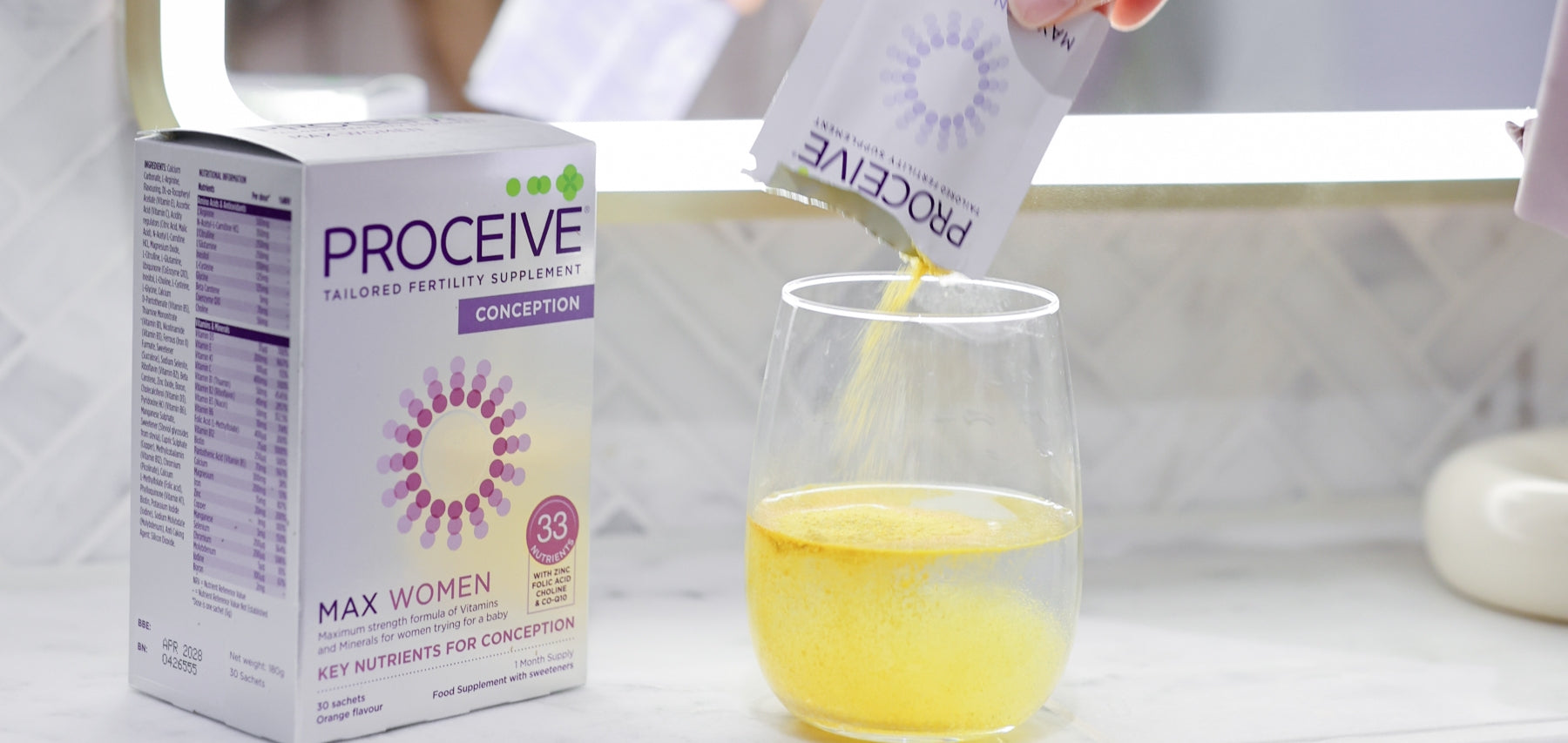
- Introduce a prenatal (e.g., Proceive® Conception)
- Continue Myo‑Inositol
- Monitor cycle return
Key Clinical Message
GLP‑1 medications can be safely and effectively used in reproductive‑age women when paired with cycle monitoring, nutritional support, and clear pre‑conception planning. HCP guidance is essential to optimise metabolic and reproductive outcomes.
References
- International Evidence‑Based Guideline for the Assessment and Management of PCOS (2023).
- Wilding JPH et al. Lancet. “Once‑weekly semaglutide in adults with overweight or obesity.”
- ACOG Practice Bulletin: “Obesity and Reproductive Health.”
- Legro RS et al. “Insulin resistance and reproductive function.” Human Reproduction Update.
- Unfer V et al. “Myo‑inositol and reproductive health.” Gynecological Endocrinology.
Frequently Asked Questions
-
What should healthcare professionals discuss before starting GLP-1 therapy in reproductive-age women?
Healthcare professionals should assess menstrual history, screen for insulin resistance, discuss fertility intentions, review nutritional intake and establish expectations around possible cycle changes.
-
Can GLP-1 therapy affect menstrual cycles?
Some reproductive-age women may experience shorter or longer cycles, missed periods, spotting or temporary amenorrhoea. As metabolic health improves, many patients also experience more regular cycles and improved ovulation.
-
Why should menstrual changes be monitored during GLP-1 therapy?
Cycle disruption is more commonly linked to low energy availability than the medication itself. Monitoring helps identify when further investigation may be appropriate.
-
When should further investigation be considered?
Healthcare professionals should investigate amenorrhoea lasting longer than three months, symptoms of RED-S, thyroid symptoms, signs of hyperprolactinaemia or the possibility of pregnancy.
-
What should patients know about GLP-1 therapy and pregnancy planning?
GLP-1 medications are not licensed for use during pregnancy. Most guidelines recommend discontinuing treatment before conception, allowing an approximate two-month washout period while supporting metabolic stability and monitoring the return of ovulation.
-
What nutritional concerns should be monitored during GLP-1 therapy?
Healthcare professionals should monitor for low protein intake, low dietary fat, micronutrient insufficiency and low energy availability, as these may influence cycle regularity, ovulation, thyroid function, mood and energy.
-
What role can myo-inositol play during GLP-1 therapy?
Myo-inositol supports insulin sensitivity, ovulatory function and hormonal balance. It may be used alongside GLP-1 therapy or during the washout period for women planning pregnancy.
-
How can healthcare professionals support women throughout GLP-1 treatment?
Support includes monitoring menstrual cycles, reinforcing adequate nutrition, discussing contraception where appropriate, introducing myo-inositol when suitable and planning ahead for pregnancy with nutritional support and GLP-1 discontinuation.