

For Healthcare Professionals Only
Thyroid function plays an important role in reproductive health, influencing menstrual cyclicity, ovulation, implantation and early pregnancy. Overt thyroid dysfunction is a recognised contributor to reproductive difficulties, making thyroid-stimulating hormone (TSH) an important marker of thyroid function in the fertility setting.¹
However, thyroid health in the preconception period can extend beyond TSH alone. Thyroid autoimmunity and nutritional status may also be relevant considerations, particularly for women with infertility or recurrent pregnancy loss.¹
Importantly, thyroid autoimmunity can be present even when TSH and circulating thyroid hormone concentrations remain within the reference range. For healthcare professionals, understanding the relationship between thyroid function, autoimmunity, nutrition and reproductive health can therefore provide a more complete picture when supporting women who are trying to conceive.²
Thyroid function and Female Fertility
Thyroid hormones interact with multiple aspects of reproductive physiology, including menstrual function and ovulation. Overt hypothyroidism is a recognised cause of reproductive dysfunction, while subclinical hypothyroidism – characterised by elevated TSH with circulating thyroid hormone concentrations remaining within the reference range – can be more difficult to identify as women may have few or no symptoms. The relationship between subclinical hypothyroidism and fertility outcomes is less clear and remains an area of ongoing research and clinical debate.²
The relationship between thyroid function and prolactin is also worth considering. Hypothyroidism is a recognised cause of hyperprolactinaemia, and elevated prolactin can interfere with menstrual and reproductive function.³ Where raised prolactin is identified, thyroid function is therefore one of the potential contributing factors that may warrant consideration as part of the wider clinical picture.
For women with known hypothyroidism who are taking levothyroxine, thyroid function should be optimised before conception. UK guidance recognises the importance of appropriate thyroid management when planning pregnancy, with both inadequate and excessive treatment potentially having implications for pregnancy and foetal health.¹
For healthcare professionals, the distinction between overt and subclinical hypothyroidism is important. Mild elevations in TSH do not necessarily carry the same reproductive implications as overt disease, and management should reflect the degree of thyroid dysfunction and wider clinical context rather than attempting to drive every woman’s TSH below an arbitrary threshold.¹˒²
Beyond TSH: Thyroid Autoimmunity and Fertility
Autoimmune thyroid disease is a common cause of hypothyroidism in women of reproductive age. Thyroperoxidase antibodies (TPOAb) are an important marker of thyroid autoimmunity.² Importantly, thyroid antibodies can be present while circulating thyroid hormone concentrations and TSH remain within the reference range. This is often referred to as euthyroid thyroid autoimmunity.²
TPOAb positivity has been associated with adverse fertility and pregnancy outcomes, although the relationship is complex and the presence of antibodies does not necessarily mean they are directly responsible for those outcomes. RCOG recognises the association between thyroid autoantibodies and adverse pregnancy outcomes while highlighting ongoing debate around testing and management.²
The recently updated 2026 American Thyroid Association (ATA) guideline provides further guidance in this area. It states that TPOAb testing may be performed in women presenting with infertility or recurrent miscarriage and supports an individualised approach, with factors such as high-normal TSH, recurrent miscarriage, other autoimmune disease or a first-degree relative with thyroid autoimmunity potentially increasing its relevance.⁴ The guideline also highlights that approximately 7–9% of euthyroid TPOAb-positive women develop subclinical or overt hypothyroidism during follow-up.⁴
For healthcare professionals, thyroid antibodies may therefore provide useful information even when TSH is currently normal – not necessarily because the antibodies themselves require treatment, but because they identify underlying thyroid autoimmunity and a population in whom thyroid function may warrant closer attention.
Nutrition and Thyroid Health During Preconception
The thyroid is particularly dependent on adequate micronutrient availability. Iodine, selenium, iron and zinc all contribute directly or indirectly to thyroid hormone synthesis, metabolism and antioxidant defence, while vitamin D has important roles in immune regulation.⁵⁻⁷˒¹¹˒¹² For women preparing for pregnancy, nutritional assessment can therefore form an important part of supporting both thyroid and wider preconception health.
Iodine and Thyroid Health: Why Balance Matters
Iodine is essential for the production of the thyroid hormones thyroxine (T4) and triiodothyronine (T3).⁵ In the UK, milk and dairy products are important contributors to iodine intake, with fish, seafood and eggs providing additional dietary sources. Iodine intake may warrant particular consideration in women who consume little or no dairy or fish, including those following plant-based diets, as plant sources are generally less reliable and not all dairy alternatives are fortified with iodine.⁸
Requirements increase during pregnancy as maternal thyroid hormone production rises and iodine is required to support foetal development.¹ However, more is not necessarily better. Both inadequate and excessive iodine intake can adversely affect thyroid function, and excess iodine exposure may be particularly relevant in individuals predisposed to thyroid autoimmunity.⁵ Preconception care should therefore consider total iodine exposure from both food and supplements.
Selenium: Antioxidant Protection Within the Thyroid
The thyroid contains a high concentration of selenium, which is incorporated into selenoproteins involved in thyroid hormone metabolism and antioxidant defence.⁶ Dietary sources of selenium include fish and seafood, meat, poultry, eggs, nuts and seeds. Selenium content in plant foods can vary considerably according to soil selenium concentrations.⁶
Hydrogen peroxide is generated as part of normal thyroid hormone synthesis. Selenium-dependent antioxidant enzymes, including glutathione peroxidases and thioredoxin reductases, help protect thyroid tissue from oxidative damage. Selenium-dependent deiodinases are also involved in thyroid hormone metabolism, including the conversion of T4 to the biologically active hormone T3.⁶
Selenium has attracted particular interest in autoimmune thyroid disease. Supplementation has been investigated for its potential effect on thyroid antibody concentrations, including a clinical trial using 200 µg/day sodium selenite in patients with autoimmune thyroiditis that reported a reduction in TPOAb concentrations.⁹ However, findings across the wider literature have not been consistent and the clinical significance of reducing antibody concentrations remains uncertain.
Iron: Essential for Thyroid Hormone Synthesis
Iron has a direct role in thyroid hormone production. Haem iron is found in meat, poultry and fish and is generally more readily absorbed than non-haem iron from plant sources such as pulses, tofu, nuts, seeds and fortified foods. Vitamin C consumed alongside plant sources can help increase non-haem iron absorption.
Thyroid peroxidase (TPO) is a haem-dependent enzyme involved in thyroid hormone synthesis, and iron deficiency can reduce TPO activity and impair thyroid hormone production.⁷ This has particular relevance during preconception because iron deficiency is common among women of reproductive age, while iron requirements increase further during pregnancy.¹⁰
Zinc: Thyroid Hormone Metabolism and Signalling
Zinc is involved in several aspects of thyroid physiology, including thyroid hormone synthesis, metabolism and mechanisms of action. It is involved in the regulation of deiodinase activity, TRH and TSH synthesis and transcription factors involved in thyroid hormone synthesis.¹¹ Good dietary sources include meat, shellfish and dairy products, while nuts, seeds, wholegrains and pulses provide plant-based sources.
Vitamin D: Immune Regulation and Thyroid Autoimmunity
Vitamin D has important immunomodulatory functions, making its relationship with autoimmune disease an area of considerable research interest. A meta-analysis found lower circulating vitamin D concentrations and a higher prevalence of vitamin D deficiency among people with autoimmune thyroid disease compared with controls.¹² However, much of the evidence is observational, meaning it remains difficult to determine whether low vitamin D contributes to the development of thyroid autoimmunity, results from it or reflects other shared factors.
From a clinical perspective, ensuring adequate vitamin D status remains important for women preparing for pregnancy irrespective of thyroid autoimmunity. Few foods naturally provide substantial amounts of vitamin D. Oily fish is one of the richest dietary sources, with smaller amounts found in egg yolk and some fortified foods.
Thyroid Nutrition in Preconception Care
These nutrients do not act in isolation. Thyroid hormone production requires iodine and iron, selenium contributes to thyroid hormone metabolism and antioxidant defence, zinc is involved in thyroid hormone metabolism and signalling and vitamin D contributes to normal immune function.⁵⁻⁷˒¹¹˒¹² This reinforces the value of considering overall nutritional status rather than focusing on a single nutrient in women preparing for pregnancy.
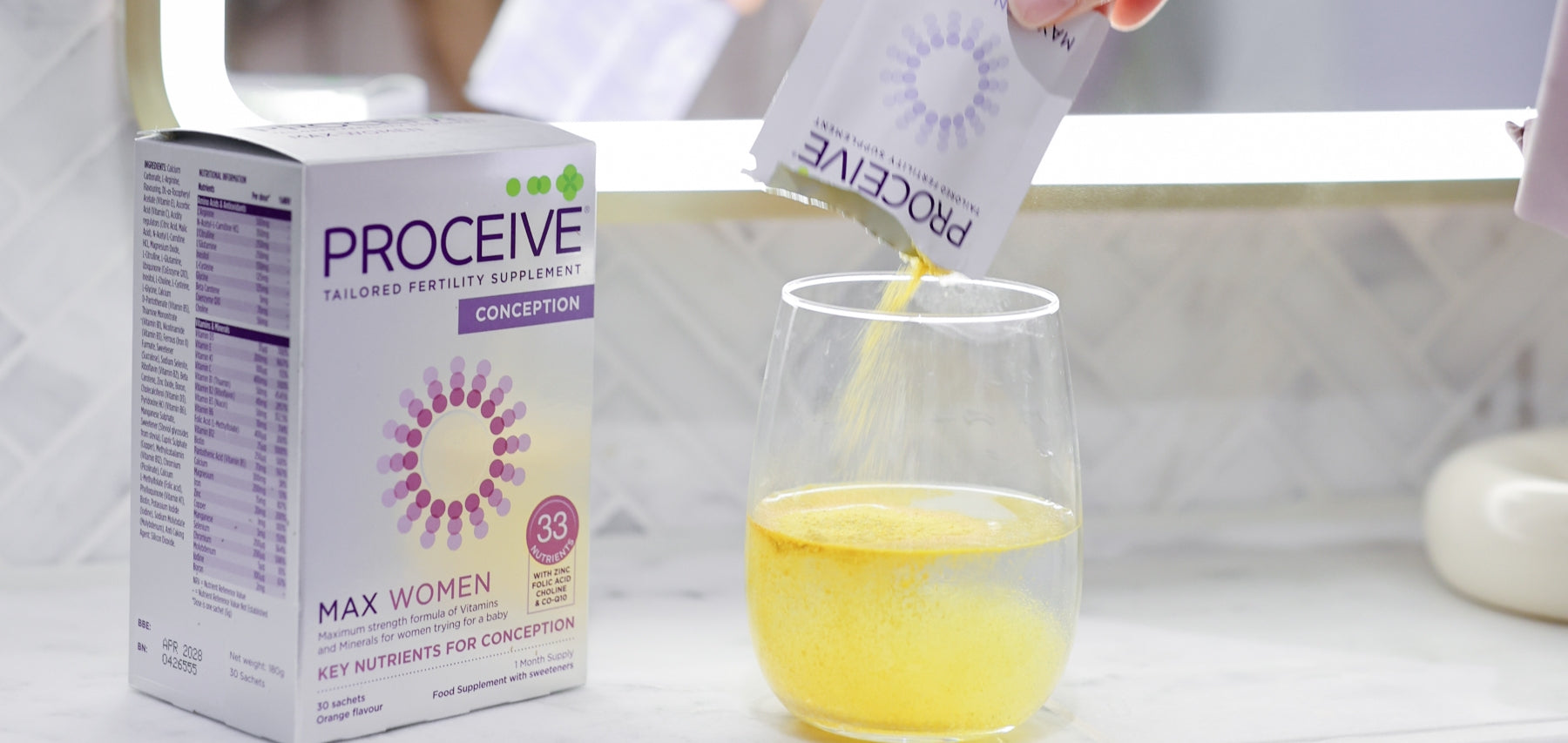
Alongside a nutrient-dense diet, Proceive Women provides 50 µg iodine per daily dose, offering a modest contribution to iodine intake. It also provides 200 µg selenium as sodium selenite, 10 mg iron, 20 mg zinc and 17.5 µg (700 IU) vitamin D, as well as a broader range of nutrients designed to support women during the preconception period.
Key Takeaways for Healthcare Professionals
- Thyroid function is an important component of reproductive and preconception health, influencing menstrual function and ovulation.
- TSH remains central to thyroid assessment, but thyroid autoimmunity can be present in euthyroid women and may warrant consideration where clinically appropriate.
- Where raised prolactin is identified, thyroid function is one of the potential contributing factors to consider as part of the wider clinical picture.
- Iodine is essential for thyroid hormone production, but both inadequate and excessive intake can adversely affect thyroid function.
- Selenium has important roles in thyroid antioxidant defence and hormone metabolism, while iron is required for TPO activity and thyroid hormone synthesis.
- Vitamin D and zinc also have relevant roles in immune regulation and thyroid function.
- Dietary patterns and overall nutritional status should be considered alongside appropriate preconception supplementation, particularly where there is a risk of nutrient inadequacy.
Frequently Asked Questions
-
How does thyroid health relate to female fertility?
Thyroid hormones interact with multiple aspects of reproductive physiology, including menstrual function and ovulation. Overt hypothyroidism is a recognised cause of reproductive dysfunction, while the relationship between subclinical hypothyroidism and fertility outcomes is less clear and remains an area of ongoing research and clinical debate.
-
Can thyroid autoimmunity be present when TSH is normal?
Yes. Thyroid antibodies can be present while circulating thyroid hormone concentrations and TSH remain within the reference range. This is often referred to as euthyroid thyroid autoimmunity.
-
Why might thyroid antibodies be considered during preconception care?
Thyroid antibodies may provide useful information in some women even when TSH is currently normal, as they can identify underlying thyroid autoimmunity. Current guidance suggests TPOAb testing may be considered in women presenting with infertility or recurrent miscarriage, with factors such as high-normal TSH, recurrent miscarriage, other autoimmune disease or a first-degree relative with thyroid autoimmunity potentially increasing its relevance.
-
Which nutrients are relevant to thyroid health during preconception?
Iodine, selenium, iron and zinc all contribute directly or indirectly to thyroid hormone synthesis, metabolism and antioxidant defence, while vitamin D has important roles in immune regulation.
-
Why is iodine balance important for thyroid health?
Iodine is essential for the production of the thyroid hormones T4 and T3. However, both inadequate and excessive iodine intake can adversely affect thyroid function, so preconception care should consider total iodine exposure from both food and supplements.
-
Why is overall nutritional status important for thyroid health before pregnancy?
Nutrients involved in thyroid health do not act in isolation. Thyroid hormone production requires iodine and iron, selenium contributes to thyroid hormone metabolism and antioxidant defence, zinc is involved in thyroid hormone metabolism and signalling, and vitamin D contributes to normal immune function. This reinforces the value of considering overall nutritional status rather than focusing on a single nutrient in women preparing for pregnancy.
References
- Chan SY, Marsh MS, Gilbert J, Boelaert K, Evans C, Dhillon-Smith R; Royal College of Obstetricians and Gynaecologists. Management of thyroid disorders in pregnancy: Green-top Guideline No. 76. BJOG. 2025;132(8):e130–e161. doi:10.1111/1471-0528.18088.
- Dhillon-Smith RK, Boelaert K, Jeve YB, Maheshwari A, Coomarasamy A; Royal College of Obstetricians and Gynaecologists. Subclinical hypothyroidism and antithyroid autoantibodies in women with subfertility or recurrent pregnancy loss. BJOG. 2022;129(12):e75–e88. doi:10.1111/1471-0528.17187.
- Khan AA, et al. Systematic review of the association between thyroid disorders and hyperprolactinemia. Thyroid Res. 2025. doi:10.1186/s13044-024-00214-7.
- Korevaar TIM, Leung AM, Alexander EK, et al. American Thyroid Association 2026 Guidelines for Thyroid Disease in Preconception, Pregnancy, and Postpartum. Thyroid. 2026;36(5):481–544. doi:10.1177/10507256261445624.
- Sun X, Shan Z, Teng W. Effects of increased iodine intake on thyroid disorders. Endocrinol Metab (Seoul). 2014;29(3):240–247. doi:10.3803/EnM.2014.29.3.240.
- Schomburg L. Selenium, selenoproteins and the thyroid gland: interactions in health and disease. Nat Rev Endocrinol. 2012;8(3):160–171.
- Zimmermann MB, Köhrle J. The impact of iron and selenium deficiencies on iodine and thyroid metabolism: biochemistry and relevance to public health. Thyroid. 2002;12(10):867–878. doi:10.1089/105072502761016494.
- National Health Service. Iodine: vitamins and minerals. NHS.
- Gärtner R, Gasnier BCH, Dietrich JW, Krebs B, Angstwurm MWA. Selenium supplementation in patients with autoimmune thyroiditis decreases thyroid peroxidase antibodies concentrations. J Clin Endocrinol Metab. 2002;87(4):1687–1691. doi:10.1210/jcem.87.4.8421.
- Snook J, Bhala N, Beales ILP, et al. British Society of Gastroenterology guidelines for the management of iron deficiency anaemia in adults. Gut. 2021;70(11):2030–2051. doi:10.1136/gutjnl-2021-325210.
- Severo JS, Morais JBS, de Freitas TEC, et al. The role of zinc in thyroid hormones metabolism. Int J Vitam Nutr Res. 2019;89(1–2):80–88. doi:10.1024/0300-9831/a000262.
- Wang J, Lv S, Chen G, Gao C, He J, Zhong H, Xu Y. Meta-analysis of the association between vitamin D and autoimmune thyroid disease. Nutrients. 2015;7(4):2485–2498. doi:10.3390/nu7042485.