
The Proceive Blog


Breastfeeding: A Unique and Ever-Changing Journey for Mother and Baby
Breastfeeding is one of the most natural ways to feed your baby, but it can also be one of the most demanding experiences for mothers. It’s a journey filled with precious moments of bonding, alongside challenges that may take time to navigate. Every mother’s breastfeeding experience is unique, and there’s no right or wrong way to approach it. Whether you’re exclusively breastfeeding, combination feeding, or expressing milk, it’s important to look after your own well-being while caring for your baby. As a mother, your body works hard to provide nourishment for your little one, and that requires energy, rest, and support. 1. Understanding Your Nutritional Needs When you’re breastfeeding, your body prioritises the production of milk to help meet your baby’s needs. While the composition of breast milk naturally adjusts to provide essential nutrients, maintaining your own health is equally important. A balanced, nutrient-rich diet is key, alongside staying hydrated and getting as much rest as possible, although we know that sleep can be elusive with a new baby in the house! Breastfeeding mums often report feeling hungrier and thirstier than usual, which makes sense considering your body is working hard to produce milk. That’s why it’s important to focus on eating regular meals and snacks that contain a variety of whole foods, including fruits, vegetables, whole grains, and protein sources. For some mums, taking a breastfeeding-specific supplement, like Proceive Breastfeeding, can be a convenient way to help support nutritional intake during this stage of motherhood. 2. Navigating the Emotional Side Breastfeeding isn’t just a physical process; it’s an emotional one too. Many mothers feel a deep bond with their baby during feeds, but it’s also normal to experience a range of emotions, from joy and fulfilment to exhaustion and frustration. It’s important to remind yourself that no two breastfeeding journeys are the same. Some mums find it comes naturally, while others may need time and support to get the hang of things. Both experiences are completely valid. If you encounter challenges, you’re not alone. There are resources and support groups available to help you navigate any difficulties, including lactation consultants, breastfeeding support helplines, and online communities. It’s important to seek help when you need it, doing so can make a world of difference. 3. Why Self-Care Matters In the whirlwind of looking after a newborn, it’s easy to forget to take care of yourself. However, your own well-being plays a big role in your breastfeeding experience. Here are a few simple ways to support yourself during this time: Stay hydrated: Keep a water bottle nearby when breastfeeding to remind yourself to drink regularly. Eat regularly: Nourish yourself with meals and snacks that contain a variety of nutrients. Rest when you can: Even short naps or moments of relaxation can help recharge your energy. Ask for help: Whether it’s from your partner, family, or friends, don’t be afraid to ask for support. 4. The Role of Proceive Breastfeeding At Proceive, we understand that a mother’s nutritional needs change during different stages of life. That’s why we developed Proceive Breastfeeding, a tailored supplement designed to support mothers from the early postpartum period and throughout their breastfeeding journey. Containing 24 carefully selected vitamins, minerals, and nutrients, Proceive Breastfeeding provides targeted nutritional support for mums during this important time. Key nutrients include: Vitamin D – recommended for both mother and baby Calcium – supports bone health Iron – helps reduce tiredness and fatigue B Vitamins – contribute to energy production While no supplement can replace a healthy diet, Proceive Breastfeeding can be a helpful addition to your routine, especially during a busy and demanding time of life. 5. Every Journey Is Different, And That’s Okay It’s important to remember that there’s no “perfect” way to breastfeed. Some mothers breastfeed for months or even years, while others stop earlier due to personal preferences or circumstances. Some find it easy, while others face challenges. Whatever your experience looks like, be kind to yourself. You’re doing your best, and that’s what matters most. If you have any questions about Proceive Breastfeeding or need advice, our team is always here to help. Feel free to reach oumast to us at info@proceive.com or send us a message on Instagram.
Learn more
Proceive’s Certified Vegan Products: Nutrition for Every Lifestyle
Proceive’s Conception, Pregnancy and After-Pregnancy ranges are certified vegan, offering advanced nutritional support without compromise.Designed to support your fertility journey while respecting your dietary choices.
Learn more
Prioritising ourselves in a Busy World – Tips for Every Mum
Motherhood is an incredible journey, full of joy, challenges, and moments that can take your breath away (in both good and overwhelming ways). I know firsthand how easy it is to get swept up in the needs of your children, partner, work, and endless to-do lists. It can feel like there’s barely any time left to think about your own well-being, let alone actually tend to it. But, let me tell you, as I’ve learned through trial and error, prioritising my own wellness doesn’t just benefit me—it benefits everyone around me. When I am taking care of myself, I’m a more present, patient, and happy mother, partner, and person. That’s why I want to share what’s worked for me and how I’ve learned to incorporate things like exercise, good nutrition &s upplements, decent sleep practices, breath work and connection with myself, into my life in a way that feels manageable, not overwhelming. Let me start by saying there is no judgment here—believe me, I know how messy and complicated life can be—but I hope I can offer some encouragement, a little inspiration, or some practical tips by what I’m sharing here. Exercise: Finding Movement That Feels Good Let’s start with exercise. Now, I know it can seem like one more chore, but hear me out: I’ve learned that it doesn’t always have to look like an intense gym session to count. In fact, for me, the key was shifting my mindset away from the “all-or-nothing” approach to movement. There were times when I’d think if I couldn’t get in consistent gym days, it wasn’t worth doing. But that just left me feeling discouraged when life inevitably got in the way. What changed my mindset a number of years back was realizing that any movement is better than no movement. On some days, it might be a 10-minute yoga session or a walk around the estate with the kids in tow. Other days, I might get out of the house for a long solo walk or fit in a more intense workout. The point is, I focus on how moving makes me feel rather than aiming for perfection. Movement gives me energy, reduces my stress, and honestly, helps me to keep my cool during those inevitable meltdowns! If you’re struggling to fit exercise into your day, I recommend starting small. Pick something you enjoy—whether it’s an online class, a gentle stretch before bed, or a brisk walk during lunch. Maybe book a class with a friend so you are accountable to one another? It doesn’t have to be a huge time commitment. Trust me, even just a little bit of movement can make a world of difference. As I always say, when it comes to movement or evercise you NEVER regret it once it’s done. Good Nutrition: Fueling Our Bodies and Minds We all know that nutrition is key to feeling our best but when life is busy and we’re juggling a million things, it’s easy to reach for convenience over nutrition. What I’ve learned over the years though is that nourishing my body (& the family) with good food doesn’t have to be complicated or time-consuming. You can start with small, sustainable changes like adding more whole foods to meals—fresh fruits and vegetables, lean proteins, whole grains, and healthy fats. I keep snacks on hand that are both convenient and nutritious, like corn cakes, fruit or enery balls so I’m not reaching for processed options when I get hungry. When you stop and take a good look at the ingredients on packaging in the supermarkets it’s pretty crazy what you might find. Even when things are labelled attractively it’s always worth glancing at the ingredients to see what’s listed. Generally it’s a case of less is more! Once youre more aware of this it’s possible to make healthier swaps for the whole family. Lots of families find meal planning really helpful and while I don’t spend a massive amount of time on this I do tend to buy similar meats and vegetables in my shop most weeks and rotate meals that I know the kids, myself and husband find tasty. Having healthy options planned makes it so much easier to make good choices when life gets busy. Supplements: Supporting Wellness From the Inside As Mums, we often put everyone else’s needs ahead of our own but I’ve found certain supplements can play an important role in supporting our wellness especially when life gets busy - which is pretty much all the time! I am a big fan of the Irish supplement brand ‘Proceive’. They were my supplement of choice all through my last pregnancy. I really liked how they tailored the ingredients to suit each trimester and then after my baby was born I transitioned to their Breastfeeding supplement and it feels like a natural progression moving on to their Every Mum supplement. Proceive Every Mum has 23 essential vitamins, minerals and antioxidants that specifically offers targeted support in three key areas: Energy, Tiredness, and Immunity. It’s worth mentioning that Proceive Every Mum utilizes bioavailable nutrients, ensuring maximum absorption and efficacy, so mums can experience the full benefits of the supplement. I find them really easy to swallow, there’s no after taste and they don’t repeat on me either.When life is super busy and other things start to slip a little, it’s peace of mind knowing that Proceive Every Mum is a reliable constant. Sleep: The Elusive but Essential Need Let’s talk about sleep. As moms, it’s the first thing to go, right? Between nighttime feedings, comforting little ones after bad dreams, or simply staying up late to catch up on Netflix, getting enough rest can feel like an impossible dream. I’ve been there—running on fumes, craving the next coffee, and wondering why I felt so depleted and foggy all the time. What I’ve come to realise though is that sleep isn’t just a luxury; it’s a necessity. Our bodies and minds need it to function, to be present, to have patience, and to stay healthy. I’ve made a few small changes and they’ve helped me get more consistent, quality rest. First, I’ve become a bit protective of my bedtime routine. I try to wind down at least 20 minutes before bed, which means putting away the laptop, phone, dimming the lights, and doing something calming like reading or practicing deep breathing (more on that later). If my mind is racing, I’ll jot down a quick to-do list for the next day, so I can mentally put it aside and focus on rest. Another thing that helps me slow down any busy thoughts that arrive at sleep time is I say to myself ‘It’s 10.30pm at night- there’s nothing I can do about this now. I’ll work on it tomorrow’ When my kids were a little younger I tried my best to take some micro-naps. Sometimes the dishwasher or washing machine or toys all over the floor were too much to overlook but I got better at prioritising myself and saw the naps as a chance to recharge my battery so I could be more present when it really mattered. So, if you have little ones and get the chance to rest, even for a short time, don’t feel one bit guilty for taking it. Breath Work: The Power of a Deep Breath Speaking of rest, breath work has been a game-changer for me when it comes to managing stress and staying centered, especially when life feels chaotic. It’s a funny thing to understand - how can something as simple as breathing help me feel better but through my teachings in my yoga classes and my own practice, I was amazed at how much of an impact it had on my mood, energy, and overall sense of calm. Here’s the thing: we often don’t realize how shallow our breathing is, especially when we’re stressed or busy. By taking just a few moments to slow down and breathe deeply, we can reset our nervous system, calm our minds, and release tension from our bodies. It’s a simple tool, but it’s incredibly powerful. One of my favorite techniques is box breathing. It’s easy to remember: breathe in for a count of four, hold for four, exhale for four, and hold again for four. Doing this just a few times can shift my entire state of mind. Whether it’s in the middle of a hectic morning or right before bed, taking time to breathe deeply helps me stay grounded. I encourage you to try it, especially if you’re feeling overwhelmed. It doesn’t take long, and you can do it anywhere—in the car, while cooking dinner, or even in the shower (one of my favourite places to do it!). Connection to Ourselves and Nature: Recharging Our Souls In the midst of nurturing babies and minding a very young family it can be challenging to reconnect with ourselves. As mums, it’s so easy to lose touch with who we are outside of our roles as caregivers. I’ve found that making time for myself—whether it’s through journaling, doing breath work, or simply spending some time alone in nature—helps me focus within. There’s something about being outside that helps me feel grounded and centered. Whether it’s a walk in the forest or by the sea, sitting in the garden with a cup of tea, or even just taking a few deep breaths outside in the morning, being in nature helps me reset and recharge. It always reminds me to slow down and appreciate the simple things. If you can, try to carve out a little time for yourself each day. Even five or ten minutes of quiet reflection can make a big difference. You deserve to have that time, just for you. Managing Busy Lifestyles: Finding Balance in the Chaos Finally, let’s talk about balance. I know how overwhelming it can be to manage a busy lifestyle, especially as a mum. There are days when it feels like I’m juggling a hundred different things at once, and I’m just trying to keep everything from falling apart. What I’ve learned is that balance doesn’t mean having everything perfectly under control all the time—it means finding ways to manage the chaos in a way that works for you. For me, that means setting boundaries, delegating when I can, and letting go of the idea that I have to do it all. Life is not perfect & we don’t need to to be either. All we need to do is try our best to do things that bring contentment into our lives and support us to be happier and healthier. It not only benefits us now but our future selves will thank us for it too. Words by Kathy Milliken - Bump Baby and Me
Learn more
Demystifying Fertility Tests by Dr Roisin O’Loughlin
Starting your fertility journey can be daunting, especially when it comes to deciding which tests to undertake first. A well-thought-out conception plan for you and your partner can help focus your efforts and alleviate some of the confusion. General Health Considerations Before setting out on your fertility journey, it's essential to first assess your overall health. Consider the following: Medical History: Do you have any long-standing medical conditions that need better control before pregnancy? Have you had surgeries that might impact your potential to become pregnant? Medications: Are you taking any regular medications that might need to be reviewed for pregnancy safety? Lifestyle Factors: What is your lifestyle like? Are you a smoker? How much alcohol do you drink per week? Do you exercise regularly? Is your diet balanced? Is stress impacting your life? Do you have concerns about your weight? Menstrual Cycle: Do you have any concerns about your menstrual cycle? Family History: Is there any family history of fertility issues or problems? It’s useful to consult your GP if you have any concerns and to undergo some blood tests to assess your overall health. These may include: Full Blood Count Urea and Electrolytes Thyroid Function Tests* Iron Studies Vitamin B12, Folate, and Vitamin D Fasting Lipids HbA1c Sexually Transmitted Infection (STI) Screen: An STI screen is important as STIs can cause blockages in the fallopian tubes which can lead to subfertility. Rubella Antibodies Fertility-Specific Tests If you’re curious about your fertility health or planning for the future, these tests can provide valuable insights: AMH (Anti-Mullerian Hormone): Measures your egg count, indicating ovarian reserve. Low levels suggest poor ovarian reserve, while high levels may indicate Polycystic Ovarian Syndrome (PCOS). Day 2-5 Hormone Profile: Includes FSH, LH, Oestradiol, and Prolactin. FSH (Follicle Stimulating Hormone): High levels may indicate declining egg numbers. LH (Luteinising Hormone): High levels may indicate PCOS. Oestradiol: Helps trigger ovulation and thickens the uterine lining. Prolactin: High levels can cause subfertility by preventing FSH and LH release. PCOS Markers: If PCOS is suspected, checking Testosterone, DHEA Sulphate, and SHBG levels is useful. Day 21 Progesterone: Confirms ovulation, especially if there are concerns about anovulatory cycles. Thyroid Function: Thyroid disorders can impact fertility in different ways. Those with thyroid imbalances are more likely to experience menstrual cycle disruptions, anovulation (absence of ovulation), fertility issues, and an increased risk of miscarriage or premature birth. Subclinical hypothyroidism (mild reduction in thyroid activity) may also impact fertility. ‘Normal’ thresholds for thyroid hormone levels are too wide for people trying to get pregnant. Thyroid conditions are very common. One in eight women will experience a thyroid disorder in their lifetime and are five times more likely to have a thyroid disorder than men. Sixty percent of women don’t know they have a thyroid condition. Thyroid tests we recommend checking include TSH, T4, T3, and thyroid antibodies. When to Seek Help Understanding when to seek professional help is crucial. The table below provides a guideline based on age: Age When to Seek Help 20s After 12 months of trying Early 30s After 9 months of trying Over 35 After 6 months of trying Early 40s After 3 months of trying Over 45 Immediately Male Factor Considerations Fertility is influenced by both female and male factors. Men should also undergo initial investigations, including: Blood Tests: To check overall health. STI Screen: To rule out infections that can affect fertility. Semen Analysis: To assess sperm count, motility, and morphology. Conclusion Knowledge is power when it comes to planning your fertility future. Being proactive about your reproductive health can help identify potential issues early and enable you to plan your family when the time is right. Regular consultations with your GP and understanding these tests can provide a clearer path on your fertility journey. Proceive® Women is a comprehensive supplement with significantly more nutrients than so many other brands, and at a much higher strength. The capsules contain 28 nutrients. They're suitable for everyone, are certified vegan, and are available on their website, as well as readily available at Boots, Holland and Barrett, and Superdrug
Learn more
What Makes A Great Fertility Supplement by Amber Izzo
Some people conceive effortlessly, almost by accident. For others, it takes a short amount of planning, a little ovulation tracking, and a few months of timed sex and trying. And then, there are those like me, for whom the path to parenthood is a long and challenging fertility journey, involving numerous tests, endless ultrasounds, what feels like a million injections and literal years of negative pregnancy tests. Throughout that time, you develop what can only be described as an obsessive awareness of every bodily change and an incredibly dedicated effort to do whatever you can to support your reproductive health. You reduce the coffee; you're changing your deodorant; your skincare. For me, it felt as though I had no control, and I was desperate to claw some of that back. To do that, I knew I needed to pay attention to what I was putting into my body, and so that involved research, making sure that the supplements we were taking were doing everything I needed them to be doing in enhancing my overall health, and my fertility. Over the years I experimented with countless supplements. In truth, initially I had no idea what to look for, though I knew folic acid was a good starting point. However, after a failed IVF cycle, I began to scrutinise my supplement regime closely. I had read books that overwhelmed me, advising I eliminated most of the products in my home, changed every bit of skincare I had and never touched a receipt again. I was to adopt a diet that for me felt far too strict, far too expensive, and anything but enjoyable; I was overwhelmed, and it was only adding more pressure to what was an already stressful situation. This led to me to delve deeper into supplements, aiming to take charge of our nutritional health, seeking a solution that was both comprehensive and convenient, didn't require five different tablets a day and feeling like I rattled like a pill box as I walked, and would support a balanced, everyday diet. That is when I discovered Proceive.Proceive came highly recommended by a few people I had met through the fertility community. I mentioned it to my nutritionist who was helping us along our journey, and she gave us the immediate go-ahead. We stocked up on Proceive Max conception sachets (male and female), and omega-3 for extra support. Adding them to our daily routines felt seamless. I no longer needed to worry about whether or not I was getting enough of each nutrient. I had confidence in the brand which was invaluable, and despite my initial apprehension about the sachets' taste, I was pleasantly surprised. It tasted like a strong orange juice, so it was easy and convenient to take. But beyond that, we could easily mix it into yoghurt or smoothies, ensuring variety. Proceive® Women was exactly what we needed: a comprehensive supplement with significantly more nutrients than so many other brands, and at a much higher strength. The capsules contain 28 nutrients, whilst the sachets boast an incredible 33; a substantial number in comparison to other brands we'd looked into. They're suitable for everyone, being certified vegan, and are readily available at Boots, Holland and Barrett, and even Amazon - allowing for quick and easy purchases. Our supply was always stocked, without ever needing to worry we wouldn't be able to get hold of it. With no fillers or binders, and designed to correct deficiencies associated with the reproductive cycle, and supplies the raw materials needed to support it. For me, it was a game changer. After 8 years of infertility before I finally had my son, Proceive had become an indispensable part of my fertility journey. It gave me one less thing to worry about, and on a path where I felt like all elements of control were taken from me, this gave me something I could hold onto. And now, as I prepare for my last round of fertility treatment, hoping to bring home a sibling for my son, Proceive has once again become - and will remain - a key part of my daily routine; a trusted support as I embark down this road one final time. Amber Izzo Blogger and Campaigner https://amberizzo.com/ @amberizzo
Learn more
Preparing For Egg Freezing By Ro Huntriss
Egg freezing is the fastest-growing fertility treatment and has emerged as a transformative option for women looking to preserve their fertility. There are many reasons why a woman may pursue egg freezing, from career pursuits and relationship reasons to medical circumstances. Whatever the reason, careful consideration should be taken to understand the process, what it entails, and what preparation can help you to achieve optimal outcomes. This blog will explore the process, as well as how diet, lifestyle, and supplement changes help you navigate and prepare for optimal outcomes. Understanding the process The process of egg freezing can feel daunting or overwhelming at first however understanding what it entails and how to prepare can help you to manage the process and take back some control. My first port of call to understand more about egg freezing was the Human Fertilisation Embryology (HFEA) website. This is also a good place to find a licensed and experienced fertility clinic that offers the service near you. Thankfully, because I worked in the fertility space, I had a good understanding of the general process, and for those that are less familiar, I think it’s worth taking the time to full explore the journey and what it entails to understand whether you feel it’s the right thing for you. Egg collection is the same as the first step of IVF and it involves taking medication to stimulate the ovaries to develop multiple eggs and help them to mature. Once the eggs are mature enough they are then collected during a medical procedure whilst you are under sedation. If you were pursuing IVF, the eggs would then be fertilised with sperm to create an embryo. With egg freezing, any mature eggs that are collected will be frozen using a cryoprotectant and stored for use at a later date. At what age should I do egg-freezing? Egg freezing is an attractive option as it allows a woman's eggs to be frozen when they are younger, preserving their quality. If eggs are frozen below the age of 35, the chances of success using these frozen eggs is higher than the natural conception rate as a woman gets older. The ideal time to freeze eggs is in your 20s, or early 30s when egg quality and ovarian reserve are higher however this doesn't mean it can’t be done at an older age. As much as freezing eggs before the age of 35 may be recommended, sometimes, life doesn’t work out that way and people may need to consider egg freezing a little bit later. I ended up freezing my eggs at the age of 37 due to a change in circumstance, but I was able to optimise my AMH and AFC and ultimately I got results I was happy with. While egg freezing can offer a better chance of a successful pregnancy in the future it is important to note that this is not a guarantee. Preparing for optimal outcomes Being armed with knowledge can be powerful. Knowing what you can do to support your chances of success can have a positive effect on your overall experience of the egg-freezing process as well as the outcome. Our diet, lifestyle, and supplements can influence both the quality of our eggs as well as our ovarian reserve, meaning that optimising these before an egg-freezing cycle could positively impact your outcomes. Diet and supplements Eggs take 3 months to mature so we have a window of opportunity where we can influence their quality. Research shows that following a Mediterranean-style diet can positively influence oocyte (egg) numbers. This style of eating is packed with antioxidant-rich foods that support egg quality such as fruit and vegetables, plant-based protein, healthy fats and whole grains. Taking a good quality prenatal supplement can also be of benefit in the lead-up to egg freezing. Incorporating a daily prenatal supplement into your routine can support markers of ovarian reserve such as anti-müllerian hormone (AMH) levels. Having a higher ovarian reserve increases the chance of more eggs being collected. When choosing a prenatal supplement, opt for one that contains multiple key antioxidant nutrients such as vitamin E, vitamin C and selenium which play a role in supporting egg quality. Proceive Women was one of the supplements I took to prepare me for egg freezing. I chose it because it contains optimal levels of important fertility-supporting nutrients in a highly absorbable form, to complement my dietary intake - I also found it really easy to take in supplement form. Proceive Max Women is also a great option, it contains higher levels of the antioxidants vitamin E and vitamin C that contribute to the protection of cells from oxidative stress - this is in a powder form. In the lead-up to my egg-freezing cycle, I followed an evidence-based diet, lifestyle and supplement regime. Although ovarian reserve can be influenced by many things, I was lucky to find that my ovarian reserve markers had increased by 40% compared with the test I had done the previous year which goes to show the potential impact of my diet, supplement and lifestyle changes. Lifestyle Our lifestyle can also impact the outcomes of egg freezing. Creating health habits and sticking to them is key, my top tips include: Incorporating daily movement Stopping smoking Limiting or avoiding alcohol intake Reducing exposure to endocrine-disrupting chemicals Emotional preparation Whatever your reasons for choosing this route, the egg-freezing journey can be an emotional one. There can be an array of emotions such as excitement, worry, and fear all rolled into one. Having a strong support system around you can really help. I was lucky to have support from close friends and a good friend was able to accompany me on my egg retrieval day. Talking to friends and family about what you are going through helps take some of the emotional weight off your shoulders. If you need extra help at any point, don't hesitate to seek out the support of a therapist or counsellor that specialises in fertility. I am also a big believer in the power of mindset, embracing the choice you have made to take control of your body and your future. Conclusion By educating yourself, adopting healthy lifestyle habits, and nurturing your emotional well-being, you can approach the egg-freezing journey with confidence and empowerment. Remember, egg freezing is not just about preserving fertility; it's about taking control of your reproductive future and embracing the possibilities that lie ahead. I was able to have a positive experience and so can you. Ro Huntriss Specialist Fertility Dietician https://dietitianro.co.uk/ @dieticianro
Learn more
Essential Support for Mothers with Young Children
Motherhood is a journey marked by countless joys, challenges, and responsibilities.
Learn more
New study shows 90% of women lack essential nutrients for baby making
A recent study has found that 9 out of 10 women who are trying for a baby have low levels of vitamins that are essential for a healthy pregnancy. These include nutrients such as folate, riboflavin, vitamin B12 and vitamin D. What we learn from the study is just how important a good diet is for giving our bodies the nutrients we need. However...even if you have a good, nutrient-rich diet, everyone can benefit from taking a supplement designed for pregnancy to ensure you are getting adequate levels of the nutrients needed before conception and pregnancy. Consultant Dietician Ro Huntriss commented on the study saying: "These finding are so important as they highlight the stark reality of the prevalence of nutrient deficiencies in women of childbearing age. Many people are unaware of he associates between other nutrients and fertility...It's important to think about folic acid, but consider all key nutrients for reproductive health". The Proceive Conception range contains the nutrients you need including folate, zinc, vitamin B6, vitamin B12 and vitamin D. Proceive Women offers a comprehensive blend of 28 essential nutrients formulated to support female fertility. We have worked closely with nutrition and fertility experts to ensure that not only every nutrient, but the level of every nutrient included in Proceive has robust clinical science supporting its impact. If you're TTC, going through IVF or just thinking about starting a family and have any questions about supplements please feel free to reach out to us on Instagram or email us at info@proceive.com
Learn more
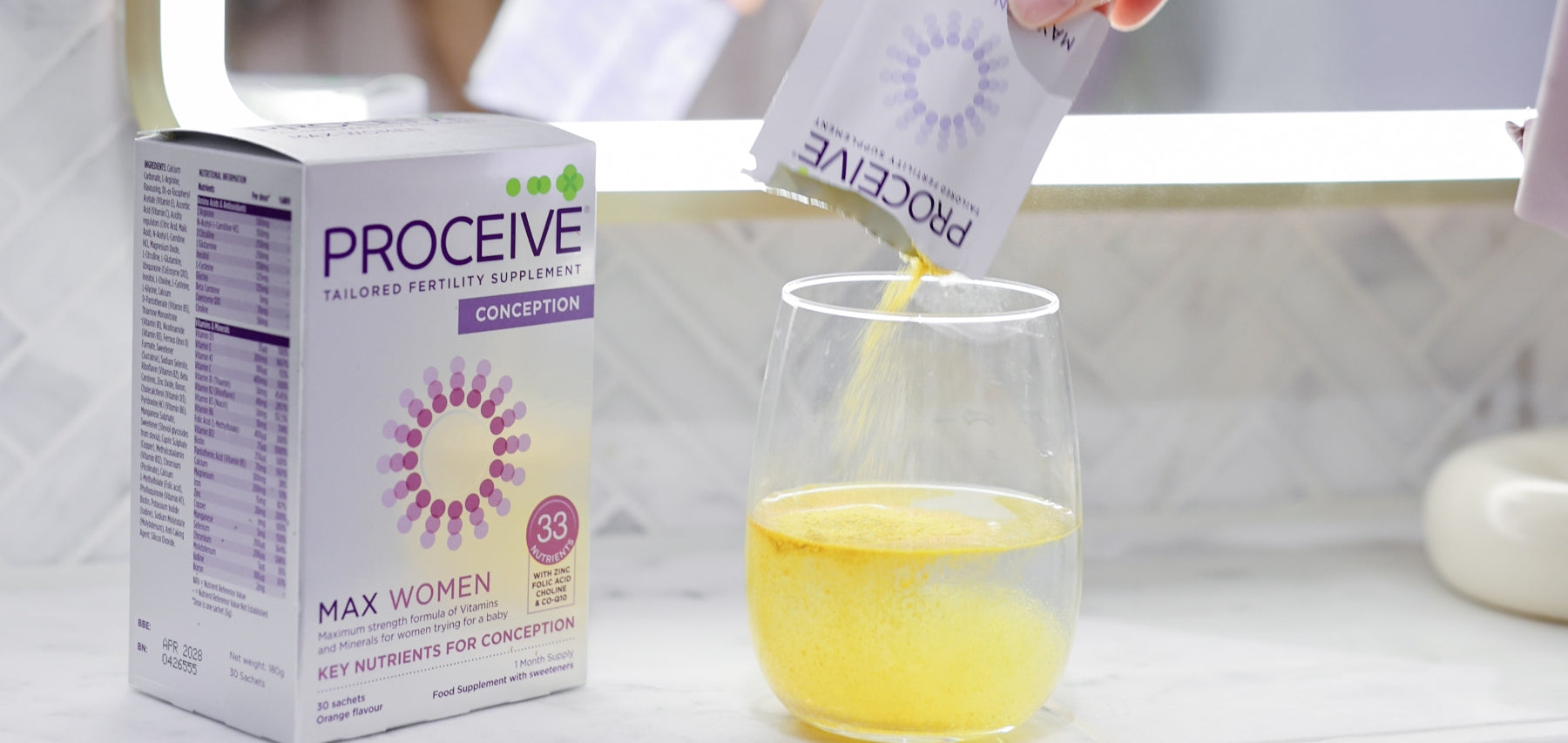
Why does my Proceive Max change colour from time to time?
Proceive Max comes in many shades of orange. Not only is this completely normal, it’s quite interesting. Our products don’t contain any artificial colours or flavours and so the natural, seasonal variation in colour that occurs with nutrients is not masked. For this reason, you may notice some colour variability occurring from batch to batch, some may look more yellow while others more red. Rest assured this is completely safe and normal, it is the same great product. We’ll always keep you informed of what’s in our products and if you have any questions feel free to get in touch with us at: info@proceive.com or send us a DM on Instagram.
Learn more
Proceive® Brand Ambassador - Dr. Roisin O'Louglin
We are delighted to announce Dr. Roisin O'Loughlin as our new Proceive Brand Ambassador. Dr Roisin is a huge fan of the Proceive range and we are thrilled to have her on board. Dr.Roisin is a UCC Medical graduate and is a vocationally trained GP from the South West GP Training Scheme. She has a special interest in Women’s Health and Dermatology. She graduated with a Masters in Obstetrics and Gynaecology in 2012 from UCC before making the leap to GP. She has a keen interest in fertility, pre-conception care, menopause, benign gynaecology and contraception. She has completed the Certificate in Menopause Management (ICGP) and is a member of the British Menopause Society. She is an experienced LARC (Implanon, coil /IUD) inserter. She is also founder of a new Irish start up called ‘The FertilityHQ’ which is an at home fertility screening test and a platform for patients on all things fertility. When she is not working, Roisin loves to be immersed in the great outdoors or on a plane to a tropical destination! On the announcement, Dr Roisin said; "Lifestyle interventions are the first port of call for many medical conditions. Pre-conception, pregnancy and postpartum health is no different. The importance of optimal vitamin supplementation cannot be under-rated. Proceive®️ as a brand ticks all the boxes providing women and men with a high quality and comprehensive multivitamin. We know that the nutrition a baby receives during the first 1000 days of life has an overwhelming positive influence on how they develop, grow and learn. Proceive's vast range offers the very best start for your family." For more information you can visit The FertilityHQ Facebook Page
Learn more
Do Men Need A Prenatal Supplement?
If you’re a woman, you’re likely very enthusiastic about getting your ducks in a row when it comes to trying for a baby. Often the first port of is sorting out your prenatal supplement. It goes without saying that a prenatal supplement is so important as it ensures you’re getting the right nutrients you need to prepare your body for pregnancy and to support your baby’s development. One thing that’s often not as widely known is if men need a prenatal supplement too? The answer, in short, is yes! It is a common misconception that sperm quality is not as important as egg health when it comes to fertility. The truth is, sperm makes up half the embryo and therefore is half the picture (remember it takes two to tango!) When is comes to supplements you should see it as if you’re taking a prenatal supplement, he should be too. However, as men and women have different nutritional needs, this means it is important to choose a prenatal that is specifically designed for men. Can Men take a Women’s Conception Supplement? When taking supplements, you have to be careful and ensure you are staying with the Recommended Dietary Allowance (RDAs) of each vitamin, and this differs for men and women. For example, women need more iron than men – adult men are recommended to take 8mg daily, while for women it’s 18mg. While women’s prenatal supplement includes what is recommended for women; Folate, Iron, Choline among others – a men’s prenatal should include vitamins that are specifically designed to support male fertility. What should a Men’s Supplement include? Folic Acid Similar to women’s preconception supplement, an important nutrient in a Men’s preconception supplement is folate or folic acid. In women, folate plays a hugely important role as it supports your baby’s brain and helps to protect against neural tube defects. While on the other hand, folate can support for sperm function & DNA synthesis. While most prenatal vitamins include folic acid (a synthetic form of folate), Proceive products, including Mens & Womens Conception, use L-Methylfolate, which is the most absorbable and bioavaible form. CoQ10 Coenzyme Q10 is an antioxidant produced by the body. CoQ10 is important for the growth and maintenance. Studies have also found that supplements of CoQ10 can help improve sperm movement.[i] Selenium Selenium is known to play a key role in male reproductive health, particularly in the production of sperm, and in promoting their motility so it is crucial to get enough of it! Spermatogenesis is the process of sperm cell development. It involves the division and maturation of primitive testicular cells called spermatogonia. During spermatogenesis, sperm cells are susceptible to oxidative damage, which reduces their viability. It works in many ways but its major role in reproduction is it protects the sperm from oxidising which simply means that it is an anti-oxidant. Proceive® Men contains 26 vitamins, minerals and amino acids and ensures that those who are preparing for conception and trying for a baby get all the support they need! Proceive® Max Men is tailored to support the nutritional needs of men over 40 when trying for a baby as well as those (of any age) who have been trying to conceive a year or more. It contains 33 carefully selected amino acids, vitamins, minerals, with each ingredient being in its most absorbable form. What else can men do? In addition taking a prenatal supplement there are a number of things that men can do to support the fertility process. Maintain a healthy weight Exercise Manage Stress Don’t Smoke and Minimising Drinking Avoid Keeping Phones in Your Pocket Stay Cool Down There It takes two to tango when it comes to conception, if you’re under 35 and TTC for less than one year why not try our Dual Pack? It’s a cost effective way to ensure you and your partner are getting the nutrients you need when trying to for a baby. [i] Gianmaria Salvio et al; Coenzyme Q10 and Male Infertility: A Systematic Review; June 2021
Learn more
Coming Off Birth Control - The Oral Contraceptive Pill and Fertility
Coming off the oral contraceptive pill can raise questions about fertility and hormone balance. Here’s what to expect and how to support your body before trying to conceive.
Learn more