

Getting pregnant naturally with PCOS – Your nutrition and supplement questions in the spotlight was originally published on The Ribbon Box, and is shared here with permission.
When you’re TTC with PCOS, small, consistent changes can help you feel more supported - starting with nutrition. From food to supplements, there’s no quick fix, but understanding your options can help you approach your next steps with confidence.
If you have polycystic ovary syndrome (aka PCOS) and you’re trying to get pregnant, it’s likely you’ve heard some very mixed messages about what’s possible.
In The Ribbon Box’s recent community poll over on IG, 25% of you said you’d been told getting pregnant naturally with PCOS is unlikely, while 75% of you said you’d heard conflicting advice, and weren’t sure what to believe.
Whether you’re just starting out, or if you’ve been trying to conceive (TTC) for a little while, we know that hearsay can get old, fast. Real support that fits into real life is the name of the game.
Fertility is complex, and Proceive® was developed to meet that complexity with precision, from the Proceive Max Women collection to Proceive Pure Myo-Inositol – the very latest in our range for those seeking additional support.
With this in mind, let’s dive into what PCOS means for fertility and natural conception, and some actionable steps you can take to support it through diet, supplementation and lifestyle.
Can you get Pregnant with PCOS?
Yes, it’s possible.
One of the most common questions we see is: can you get pregnant with PCOS? The short answer is yes. Many people with PCOS do conceive, including without fertility treatment.
The idea that there is a single “PCOS natural pregnancy success rate” isn’t quite right. PCOS presents differently for everyone, but we do know that it can disrupt the hormones that trigger the release of an egg, making ovulation inconsistent or difficult to predict.
This is why so much of the conversation around PCOS and fertility nutrition focuses on ovulation support, alongside other ‘baseline’ female fertility factors.
Key Levers for Getting Pregnant with PCOS Naturally
Getting specific, when it comes to getting pregnant with PCOS you told us that ovulation is the single biggest challenge.
When asked what felt hardest, 100% of you said tracking ovulation, and when we asked you whether you know when they ovulate, 75% of you said no. Irregular cycles do not mean ovulation never happens, though.
Many women with PCOS do ovulate, just not on a predictable timeline. That unpredictability makes traditional tracking methods frustrating and often unreliable, so this is where we’ll look to put aside the more textbook approaches, and start to look deeper into the details.
One common reason ovulation can be disrupted in PCOS is insulin resistance. Insulin is the hormone that helps move sugar from your bloodstream into your cells. When the body becomes less responsive to insulin, it produces more of it. Higher insulin levels have been showed to interfere with ovarian hormone signalling, which can delay or suppress ovulation.
Another potential challenge is egg quality. We see these concerns cropping up within our community on the reg, with some research suggesting that egg quality may be lower in women with PCOS, compared to women without, although other studies pose that there might not be a significant difference.

But what can we do ourselves, at home, to make sure we’re getting the right support across these potential challenges?
Eat well, and Nourish Right
With nutrition in the spotlight, dietary support for PCOS can be an incredibly helpful and proactive way to support fertility if you’re trying to conceive (TTC).
The goal? Getting the right nutrients in the right amounts, plus maintaining steady blood sugar and consistency.
Dietary tweaks to try; simple, realistic changes include:
- Eating regularly, and avoid fasting and skipping meals.
- Pairing carbohydrates with protein and fibre. Remember - protein and fibre slow the release of glucose into the bloodstream, helping support more stable insulin levels.
- Choose lean proteins, such as eggs, chicken, turkey and lentils to help you feel full.
- Choosing high, healthy fibre - think non-starchy vegetables, like kale, spinach, broccoli, peppers and whole grains.
- Minimise refined sugar, limit white bread, sweet snacks and sugary drinks.
- Incorporating high-dose, high-quality supplementation
Where Supplements fit in
Food is foundational, but supplementation can help ensure you’re checking all the boxes – think of it as a belt and braces approach.
When we asked you about your biggest fertility supplement questions, 33% of respondents wanted to know “Which ones actually support TTC?”
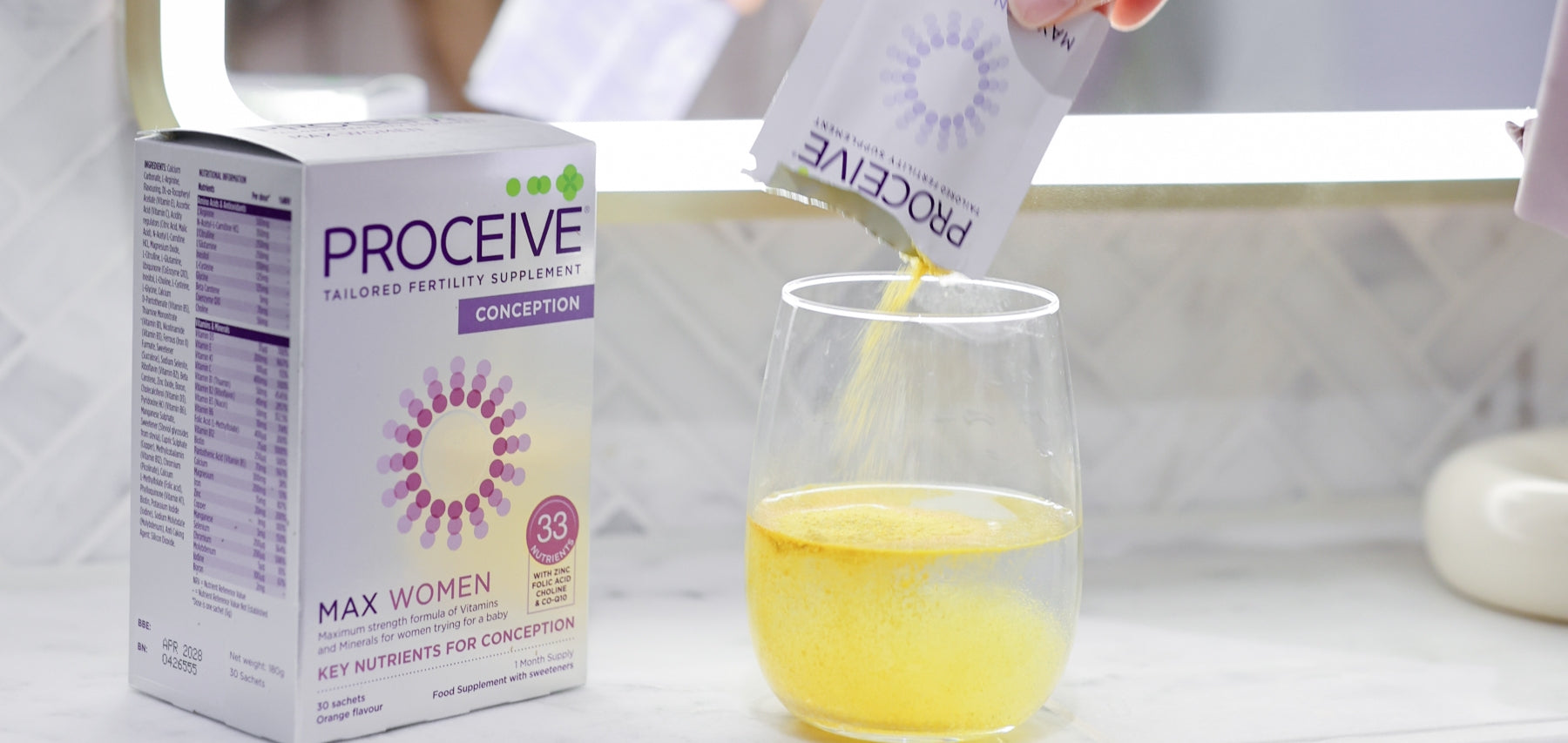
There’s a reason so many women reach for the Proceive Max Women.
Proceive Max Women delivers 33 scientifically selected nutrients including amino acids not typically found in standard fertility vitamins, at levels designed to support fertility, not just general health. This includes 400µg of folic acid in the L-Methylfolate form, chosen for its absorbability.
Unlike general prenatal supplements, Proceive Max Women was developed specifically for the preconception window – the critical 90 days where egg development occurs. That focus on fertility, rather than pregnancy alone, is what sets it apart.
With a focus on egg health, Proceive Max Women also fuels the whole reproductive system, supporting egg quality, energy support, cell division and hormone regulation.
So for people with PCOS, this is an excellent baseline, but going further than just the text book approach means you’ll know you’re getting a little extra support.

Why Myo-Inositol?
Half of you told us you’d never heard of Myo-Inositol before, but it’s one of the most frequently mentioned supplements in PCOS conversations, and for good reason.
Myo-Inositol is a naturally occurring compound found in foods such as fruits, vegetables, grains and nuts. It plays an important role in insulin signalling and ovarian function, and is the most biologically active form of inositol.
It’s not a cure and not a guarantee, but it can be a helpful piece of a broader fertility plan.
Proceive Pure Myo-Inositol benefits include:
- Simple and convenient to take
- Highly bioavailable for maximum absorption
- No fillers or binders
Recommended daily dose: 4,000mg. It can also be taken alongside a multivitamin like Proceive Max Women, making it flexible for broader nutritional support.*
Lifestyle Tweaks to Support Your PCOS TTC Journey
In response to The Ribbon Box poll, 67% of you said you were ‘still figuring out’ the lifestyle support options that work for you, on your PCOS TTC journey.
Alongside diet and supplementation, these pillars can help build up your supportive foundation even more:
- Sleep: Regular sleep and wake times support hormone regulation and insulin sensitivity.
- Gentle movement: Walking, stretching exercises such as yoga, swimming or light strength training can support whole-body health, strength and blood sugar balance.
- Mental health & nervous system support: Chronic stress affects hormone signalling. Small changes like breathing exercises, time outdoors or less screen time can help.
- Cycle awareness: Watching patterns over time (not perfect ovulation dates) can help you understand how your body behaves, and adjust accordingly.
Whilst there’s no magic switch with PCOS, at the very least, these tweaks might just help you feel a little more grounded, knowing you’re doing what you can to support your body.
The team at The Ribbon Box know that family-building, pregnancy and parenthood aren't always straightforward. Check out The Ribbon Box to stay up to date, and get practical support, discounts and handy tips just like these delivered straight to your inbox.
Frequently Asked Questions
-
Can you get pregnant naturally with PCOS?
Yes. Many people with PCOS do conceive naturally. PCOS can make ovulation harder to predict, but irregular cycles do not mean ovulation never happens.
-
Why is ovulation often difficult to track with PCOS?
PCOS can disrupt hormone signalling, making ovulation inconsistent. This unpredictability means traditional tracking methods are often unreliable.
-
How does insulin resistance affect fertility in PCOS?
Insulin resistance can increase insulin levels, which may interfere with ovarian hormone signalling. This can delay or suppress ovulation.
-
What nutrition steps can support fertility when trying to conceive with PCOS?
Eating regularly, pairing carbohydrates with protein and fibre, choosing lean proteins and high‑fibre vegetables, and reducing refined sugar can help support more stable insulin levels and overall reproductive health.
-
How can Proceive Max Women support someone with PCOS?
Proceive Max Women provides 33 nutrients designed for the preconception window, including amino acids and L‑Methylfolate. It supports egg quality, energy, cell division and hormone regulation.
-
What is Myo‑Inositol and how can it help?
Myo‑Inositol is a naturally occurring compound that supports insulin signalling and ovarian function. It is frequently discussed in PCOS fertility support and can be taken alongside a multivitamin.
-
What lifestyle changes may support natural conception with PCOS?
Regular sleep, gentle movement, stress support and observing cycle patterns over time can all help contribute to a more supportive foundation for TTC with PCOS.