

This article shares a deeply personal fertility journey that highlights an often‑overlooked truth: sperm health plays a vital role in embryo creation and IVF outcomes. Through loss, lifestyle change and renewed understanding, it explores patience, resilience and why fertility is rarely just about eggs — it’s about supporting both sides of the equation.
I don’t think I ever truly understood how painful a fertility journey can be until I was on one.
Before that, it was one of those things I’d hear about and think, Wow, that sounds hard, before mentally moving on.
It’s a bit like being single and dating. Someone says, “It’ll happen when it’s meant to happen,” and you’re smiling on the outside while internally screaming“ FAB, but when exactly is my person rocking up?”
Fertility can feel exactly like that.
Living With the Waiting and Uncertainty of Fertility
I never imagined I’d be six years into this journey. I turn 40 this year and one of the hardest things I’ve had to process is that we still don’t have our family yet.
What this experience has shown me is just how pre-programmed we’ve become for instant gratification. If I want a pizza, I can order it from my phone and it’s at my door in 20 minutes. If I need something for the house, it’s next-day delivery. I can order something from the other side of the world and it’ll be with me by the end of the week.
Patience is no longer something life naturally teaches us. It’s something we have to actively practise.
And unfortunately, fertility does not do next-day delivery.
That’s what makes it so mentally hard to process. We live in a world that moves fast, but fertility does not. It asks for waiting, uncertainty, and resilience - all while your brain is shouting, Why isn’t this happening right now?!
If you’re in that place, babe I understand.
After six years, we’ve had so many difficult conversations as a couple. So many tears. So many moments of asking, do we keep going? Will we ever get our baby?
We made the decision quite early on that if we ever reached the point where enough was enough, we wanted to feel 100% certain we had done everything we could. If this wasn’t going to happen for us, we wanted to stop knowing we had tried every option of conceiving and that we had given it our all.
Fertility journeys are emotional rollercoasters. There are incredible highs, but there are also body-numbing lows. And even when you’re in it together as a couple, you’re also in it separately - each carrying your own hopes and fears and your own version of heartbreak.

Embryo Creation, IVF and Our First Major Heartbreak
Embryo creation during IVF - especially as a same-sex male couple using donor eggs and surrogacy - is a perfect example of that. Together, but separate at the same time.
The first time we made embryos was one of the biggest emotional rollercoasters of our entire journey.
We bought 16 frozen donor eggs in the UK - at an eye-watering cost - and used our frozen sperm to begin the process of making embryos. In the UK, embryos are most commonly created in one of two ways: conventional IVF, where eggs and sperm are combined in a dish and fertilisation happens there, or ICSI, where a single sperm is
injected directly into an egg. ICSI is often used when there are sperm-related concerns or previous fertilisation problems.
At that stage, we had no known fertility issues. Our sperm had been tested and everything looked fine.
We split the eggs equally: eight each.
The eggs were fertilised on the Friday, and on Saturday morning the lab called. I will never forget where we were - sitting in bed with our morning cup of coffee. They told us we had six embryos from my sperm and five from my husband’s.
We cried. We were so excited. It suddenly felt like our baby might really be on their way. What I hadn’t prepared myself for was what happened next.
The following Wednesday, I was on my way to a photoshoot for work. We had flown a photographer over from New York. The team had come down to London from Glasgow. I was there as brand founder, overseeing the whole shoot.
As I walked into the studio, my phone rang.
It was the lab.
They told me that none of my embryos had made it to blastocyst stage.
A blastocyst is an embryo that has developed for around five to six days after fertilisation - the stage fertility clinics often hope an embryo will reach before transfer or freezing.
I stood outside the studio and burst into tears.
I remember hiding in a fire escape to cry. It was one of the lowest moments of our fertility journey so far. One of the hardest things about fertility heartbreak is that the world doesn’t stop for it. You still have to pull yourself together, scrape on a smile, and carry on.

What This Journey Taught Me About Sperm Health
After that, our fertility doctor advised me to spend four months making lifestyle changes focused entirely on sperm health.
He said: “We may never know for certain why the embryos didn’t make it to blastocyst. It may have been the eggs, but it could also have been the sperm - and we want to rule out every possibility, so this doesn’t happen again.”
That was a huge moment for me, because like so many people, I had absorbed the idea that fertility is mostly about eggs. But male factor infertility is involved far more often than people realise.
So, I changed everything and followed our fertility doctors advice...
I monitored my stress. I cut back my international business travel wherever I could. I stopped burning scented candles. I avoided plastics around food and drink. I stopped using heated car seats. I cut out alcohol completely for four months. I stopped eating ultra-processed food. I limited caffeine to one cup a day. Cigarettes and recreational drugs were, of course, a total no.
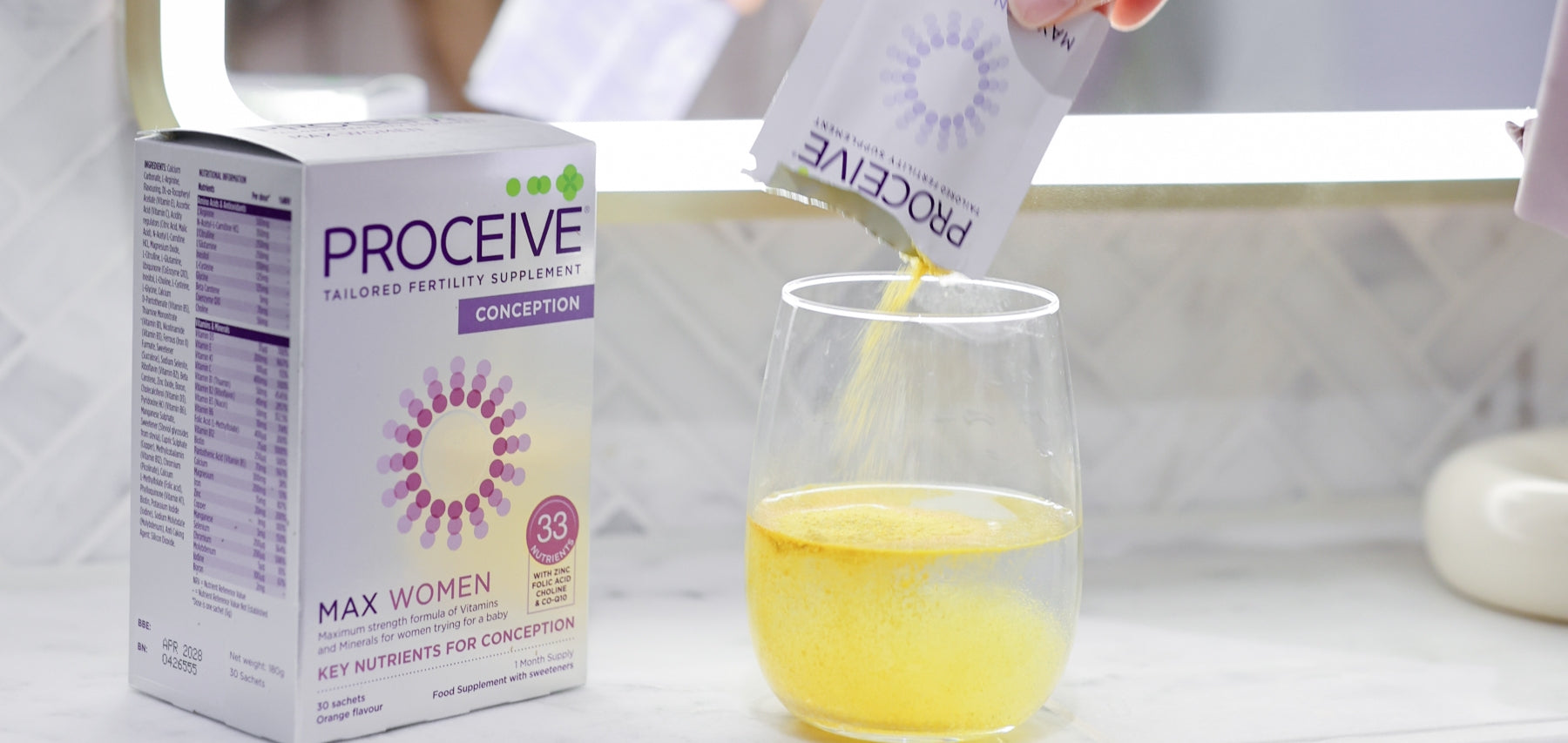
I was also advised to take daily sperm-health-focused supplements like Proceive.
What I hadn’t realised before this journey is that sperm health is not just about whether sperm are present - it’s also about quality. The World Health Organization’s semen reference values look at things like sperm concentration, motility and morphology, and fertility specialists often advise giving lifestyle changes around three months to have a chance to influence a new cycle of sperm development.
That’s why the four months mattered.
Proceive became part of that routine. Not because a supplement can magically fix infertility, but because it offers targeted nutritional support for men trying to conceive, including nutrients like zinc and selenium, which are linked to normal fertility and normal spermatogenesis, alongside antioxidants such as vitamins C and E.
By the end of those four months, physically, I looked great. Being sober looked good on me. My skin was glowing, I had dropped weight, and wow did the compliments roll in. But fertility anxiety does not feel amazing.
That’s the contradiction no one really talks about. Yes, you try to reduce stress. Yes, you try to stay calm. But fertility is stressful. You can meditate, drink the filtered water and say your affirmations, but when your future family feels uncertain, of course it affects you.
Still... in our case, the changes helped.
I froze sperm for a second time and went on to create embryos successfully in two further rounds.
And that’s why I think sperm health deserves so much more attention than it gets.
There is so much focus on the egg, and of course egg quality matters. But embryo creation is never just about one side of the equation. It takes two to tango - or in our case, an army. In the UK, donor conception now accounts for around 1 in 5 IVF and donor insemination births, which shows just how many modern families are being built through more complex fertility pathways than people often realise.
So if someone you love is going through fertility treatment, learn a little more. Ask better questions. Understand that sperm health matters too.
And if you’re in the thick of your own fertility journey, I’m sending you so much love.
Keep going for as long as it feels right for you.
Love always,
XX Jules
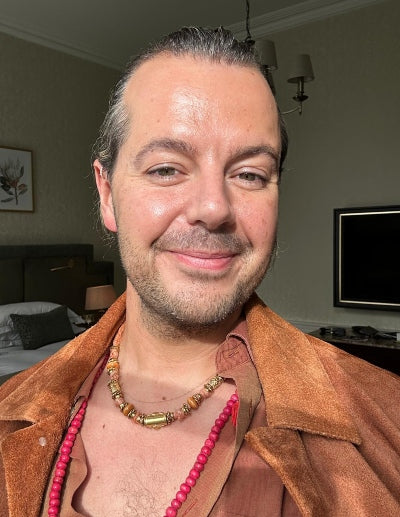
To hear more from Jules and follow his journey, you can connect with him here
Frequently Asked Questions
-
Why is sperm health important in fertility and IVF?
Sperm health is not just about whether sperm are present. Quality factors such as motility, morphology and overall health can influence how embryos develop during IVF, including whether they reach blastocyst stage.
-
What happens if embryos don’t make it to blastocyst stage?
When embryos do not reach blastocyst stage, they usually cannot be transferred or frozen. Fertility specialists may then look at both egg and sperm factors to understand why development may have stopped.
-
Can lifestyle changes really affect sperm quality?
Yes. Lifestyle factors such as stress, alcohol intake, diet, heat exposure and environmental influences can affect sperm health. Fertility doctors often recommend making changes well ahead of treatment to support sperm quality.
-
How long does it take for sperm health changes to make a difference?
Sperm develop over time, so specialists commonly advise allowing around three to four months for lifestyle changes and nutritional support to influence a new cycle of sperm development.