

Written by Jess Willow, Specialist Fertility, Women’s Health and Pregnancy Dietitian, this article explores why maternal nutrition is the true foundation of a healthy pregnancy. Pregnancy places extraordinary physiological demands on a woman’s body, yet focus often shifts quickly to the baby alone. By highlighting the nutrients that protect both mother and baby, this piece reframes pregnancy nutrition as an essential investment in maternal health, resilience and long‑term wellbeing.
Nurturing You, Too
Why maternal nutrition is the foundation of a healthy pregnancy and a thriving baby.
You have finally got that positive pregnancy test. What now? In trimester 0 or the preconception period all focus is on your health, supporting you to get ready for a healthy pregnancy. But once pregnancy is confirmed along with joy, relief and possible apprehensiveness, we also may see a subtle but significant shift occurring. The focus moves almost entirely to the "bump," while the woman carrying the baby can sometimes feel like an afterthought. But here is the clinical truth: nurturing your baby begins with nurturing you.
Why Pregnancy Nutrition Must Support the Mother First
The physiological demands of pregnancy are immense. Your blood volume increases by nearly 50%, your heart works harder, and your metabolism recalibrates to prioritise the growing life within you. If your nutrient stores are low, your body will prioritise the baby, often leaving you depleted, fatigued, and vulnerable.

Key Nutrients to Prioritise During Pregnancy
Folate and Folic Acid
In the UK and Ireland, there are historically high rates of Neural Tube Defects (NTDs) compared to European neighbours. While general recommendations are to supplement with 400µg of Folic Acid with some individuals requiring higher doses(1). It has been highlighted that many women do not start supplementation early enough, or have a genetic variant (MTHFR) that makes processing synthetic folic acid less efficient therefore the active form (3). Methylated folate is the form now more commonly seen in nutritional supplements.
By taking a high-quality folate or folic acid supplement in the preconception period (a minimum of 6 weeks before planning to become pregnant) and continuing it into pregnancy, you aren't just protecting the baby’s spine; you are supporting your own cellular repair, energy levels and reducing your risk of anaemia.
Folate can be found in a variety of foods such as leafy greens, beans and legumes, fortified foods and oranges.
Vitamin D in Pregnancy
We love to talk about the weather, but rarely about how it affects our biochemistry. From October to March, we cannot synthesize Vitamin D from sunlight, regardless of how long we spend outside (1).
In the northern hemisphere insufficiency and deficiency is widespread. For a pregnant woman, Vitamin D is the gatekeeper for calcium absorption. Without it, your body may "leach" calcium from your own bones to provide for the baby’s skeletal development. Vitamin D is also a requirement to support your immune system which can become depleted during pregnancy as well as supporting hormone production. Getting sufficient Vitamin D ensures bone density remains protected as well as keeping the immune system healthy, supporting energy levels and hormone health.
While we can find some vitamin D in foods like oily fish, egg and fortified foods, it is generally not possible to get sufficient amounts from food alone. Therefore supplementing with a minimum of 10mcg (400IU) daily in pregnancy and breastfeeding is recommended with higher doses required for some individuals and for those with suboptimal or deficient levels (1, 2).
Iron and Maternal Energy Levels
"Pregnancy brain" is often laughed off as a rite of passage, but some nutrient depletions may worsen this. Iron-deficiency anemia is incredibly common in pregnancy with maternal iron stores being directly linked to birth weight and preterm delivery risk (4).
However, for the mother, iron is about vitality. It is the vehicle that carries oxygen to your brain and muscles. During pregnancy it is recommended to supplement with 16-20mg of Iron daily in addition to a balanced diet (2). Iron is found in red meat, eggs, poultry, beans, lentils and fortified foods.
Omega‑3 Fatty Acids for Mother and Baby
We often discuss DHA in relation to the baby’s brain and eye development, which is vital, but the benefits for the mother are equally important. Emerging research suggests a strong correlation between adequate Omega-3 intake has demonstrated beneficial effects on the mother, such as the reduction of postpartum depression symptoms, the decrease of cardiovascular risk, and the anti-inflammatory role (5).
Two portions of oily fish per week provide sufficient amounts of both essential fatty acids, EPA & DHA. However, if oily fish is not taken in the diet, it is recommended to take a supplement containing high-quality DHA with EPA, to support own cognitive resilience and emotional well-being as well as babies development.
Calcium and Long‑Term Maternal Bone Health
While much of the focus during pregnancy is on the baby’s skeleton, calcium is a critical mineral that is just as much about the mother’s long-term health as it is the baby's growth. During the third trimester, the foetus requires significantly more calcium, rising from roughly 250mg to 350mg per day to support bone health. If intake is insufficient to meet this demand, the body will biologically prioritise the baby by resorbing calcium from your own maternal bone stores. This process can lead to a temporary decrease in maternal bone density, increasing the risk of dental issues and, later in life, osteoporosis.
Ensuring a consistent intake of calcium, ideally paired with Vitamin D to ensure it is actually absorbed is the best way to protect your bones while building your babies and has been associated with lower rates of gestational diabetes (6)
It is recommended to aim for at least 3 servings of dairy (or fortified alternatives) per day during pregnancy.

The Bottom Line on Supplements and Food‑First Nutrition
As a dietitian, my mantra is always "food first." A plate full of leafy greens, lean protein, and vibrant colours is optimal. However, it can be challenging to maintain a balanced diet throughout pregnancy for a number of reasons. Along with this, higher nutritional needs throughout pregnancy increase the risk of nutritional insufficiencies occurring.
Choosing a supplement isn't an admission of a "poor diet", it is a strategic clinical tool. It is an insurance policy for health, ensuring that while you give everything to your baby, you aren't left with nothing for yourself.
Written by: Jess Willow, Specialist Fertility, Women’s Health and Pregnancy Dietitian.
Discover more expert insights from Jess Willow on fertility, pregnancy and women’s health at her website.
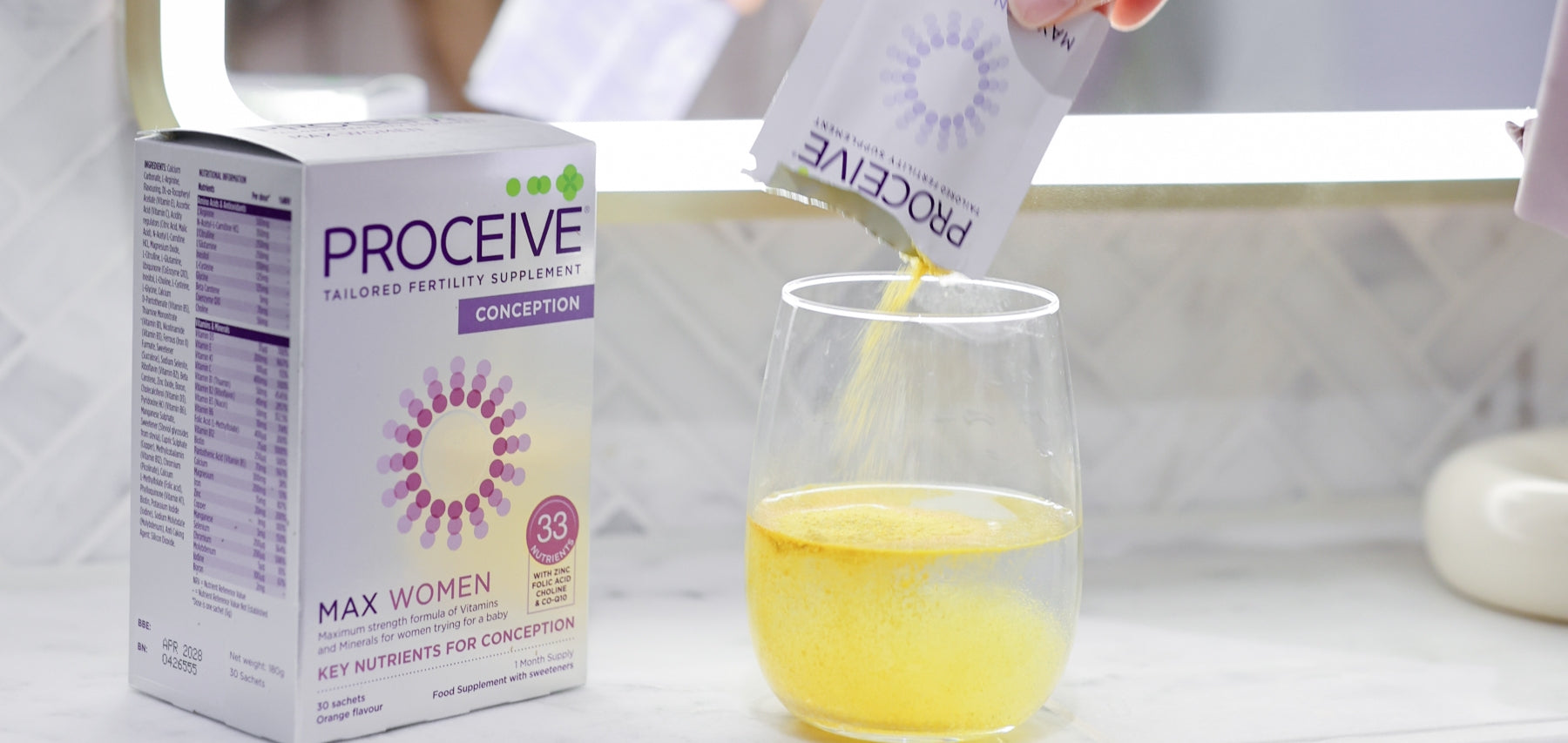
At Proceive, we recognise that nutritional needs change at each stage of the journey, from preconception through pregnancy and after pregnancy. Our supplements are thoughtfully formulated to support women with targeted nutrients appropriate for every stage, helping to bridge nutritional gaps while complementing a food‑first approach. They are designed to support both maternal wellbeing and healthy development, when nutritional demands are at their highest.
References
1. NICE (2025) Maternal and child nutrition: nutrition and weight management in pregnancy and nutrition in children up to 5 years. NG247
2. Institute of Obstetricians and Gynaecologists (RCPI): Clinical Practice Guideline No. 37: Nutrition in Pregnancy (2019). Accessed Here
3. Cawley S. et al. (2016). Folic acid supplement use and dietary folate intake among pregnant women in Ireland. Journal of Public Health.
4. Casanueva E. & Viteri, F. E. (2003). Iron and Oxidative Stress in Pregnancy. The Journal of Nutrition.
5. Judge, M. P. et al. (2007). Maternal consumption of eicosapentaenoic acid and docosahexaenoic acid during pregnancy. American Journal of Clinical Nutrition.
6. Wang F. et al (2025) The efficacy of calcium and vitamin D3 supplementation in improving pregnancy and neonatal outcomes. Front. Pediatr.
Frequently Asked Questions
-
Why is maternal nutrition so important during pregnancy?
Pregnancy significantly increases nutritional demands. If maternal nutrient stores are low, the body will prioritise the baby, which can leave the mother depleted, fatigued, and vulnerable. -
Why is folate important before and during pregnancy?
Folate supports neural tube development and maternal cellular repair. Many women do not supplement early enough, making preconception and early pregnancy intake especially important. -
Can vitamin D really affect a mother’s bone health?
Yes. Without sufficient vitamin D, calcium may be drawn from the mother’s own bone stores to support fetal skeletal development, increasing long‑term bone health risks. -
Is iron deficiency common during pregnancy?
Iron‑deficiency anaemia is very common in pregnancy and may affect maternal energy, cognition, and birth outcomes if not adequately supported. -
Are supplements necessary if I eat a healthy diet?
Supplements are not a replacement for food but can act as a strategic tool to help meet increased nutritional needs when diet alone may fall short.